Residential Epoxy Flooring St. Louis: Basements, Garages & Driveways
Vince and his crew coat basement floors, garages and driveways across St. Louis and St. Louis County, checking every slab for moisture before any resin goes down.
Floors for the Way St. Louis Homes Are Built
A St. Louis house usually asks three different things of a floor coating. The basement has to live with cool, sometimes damp concrete. The garage takes brine all winter and hot tires all summer. A driveway sits out in all of it. Which matters most often comes down to when the house went up: the city's median home dates to 1938, inner-ring suburbs such as Webster Groves and Clayton are mostly early-1950s, and West County homes in Chesterfield or Wildwood run from the 1980s into the 1990s.
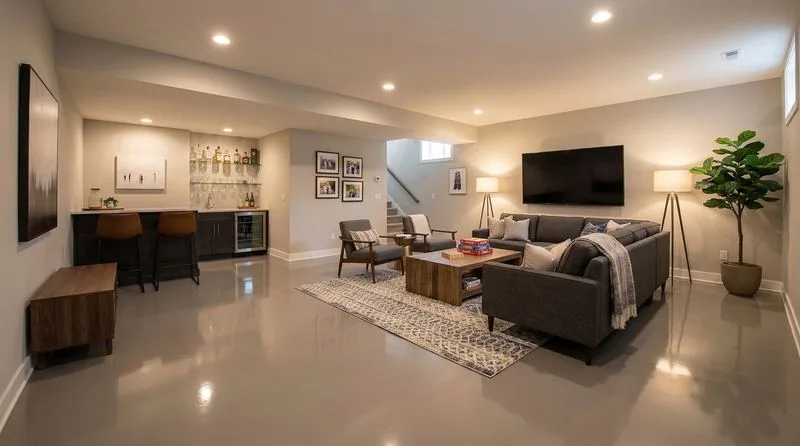
Basements are a big part of the story here — three of our Google reviews are for basement floors, one of them finished in metallic. The usual build is an epoxy color coat locked under a clear top coat: flake for a laundry or workshop corner that sees boots and boxes, metallic for a rec room, a solid color for a home gym. Polyaspartic and polyurethane top coats are both available, and anti-slip additives can go into any coating for basement stairs and wet entries.
Below-grade concrete holds moisture, so we check every basement slab before we quote. If it reads damp, we use a moisture-blocking primer or tell you plainly that the slab needs other work first. A coating does not waterproof a basement or stop a sewer backup. What it does give you is a sealed, washable floor that is far easier to clean up if water ever finds its way in.
Outside the basement, we coat garages and driveways as well. A St. Louis garage gets beet-juice brine from MoDOT's pre-treated highways in winter and tires that have been baking on 90°F pavement in summer, so it gets a hot-tire-resistant top coat. The attached or detached garage floor is often done on the same trip as the basement. For typical prices by room and finish, see our St. Louis price guide, or read why so many garage floors peel at the garage door first.
Get a Free Quote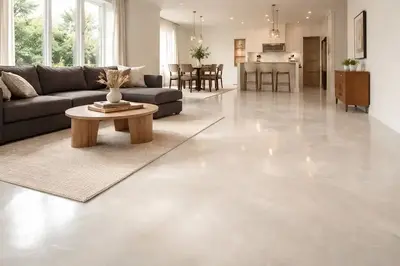
What a Coated Floor Does Around the House
Basement damp, winter brine, summer heat and everyday mess — here is how a sealed floor handles each one.
Brine
Keeps Brine Off the Slab
MoDOT mixes its highway brine with beet juice, and the city adds a liquid calcium/magnesium chloride to its salt. Whatever your car carries home stays on the sealed surface, where it squeegees out instead of soaking in.
85 nights
Rides Out Freezing Nights
Most freezing nights here end in a thaw. Flexible crack filler and a top coat that moves with the slab help an unheated garage floor handle that swing.
Basement
A Basement Floor You Can Wash
A bare basement slab is dusty and stains easily. A coated one is a single seamless, scrubbable surface with no grout lines, and it can be mopped and disinfected after a spill or a water event. It is not waterproofing — that is why the moisture check comes first.
Mop
Quick Cleanup
Salt grit in February, muddy paws in April, sawdust from a weekend project — it sits on top of the coating, not in it. A damp mop pulls it up with no wax or special cleaner.
Space
Makes the Basement Usable
In St. Louis's older houses, a clean, bright basement floor turns a storage level into a gym, playroom or workshop you actually want to spend time in.
See typical prices →Outside
Driveways Too
Driveways are on our list as well. Ask about yours at the free estimate and we'll tell you honestly whether the concrete is a good candidate for a coating.
How Vince Approaches Your Floor
Five steps, starting with the two things that decide whether a home floor lasts: the moisture in the slab and the cracks in it.
Free Visit & Written Quote
Vince or one of his crew walks the basement, garage or driveway with you, looks at the slab's age, cracks and stains, goes through finishes and leaves a written quote with every prep step listed. Schedule yours free.
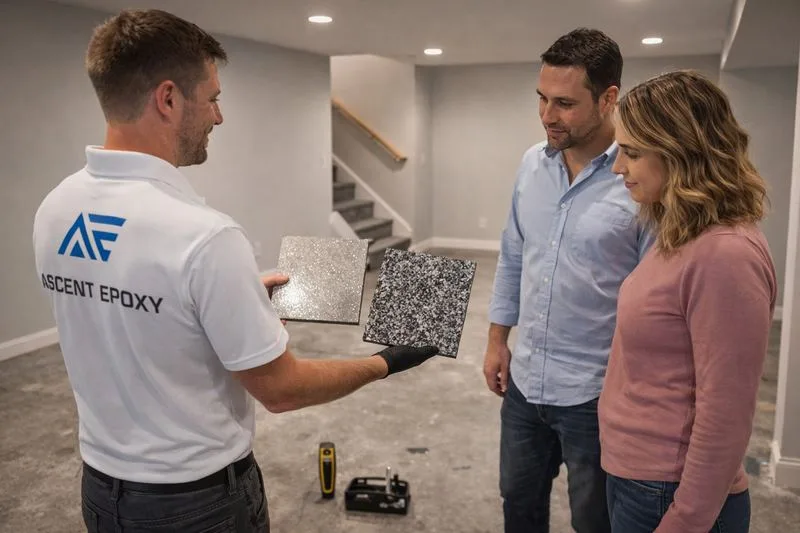
Surface Preparation
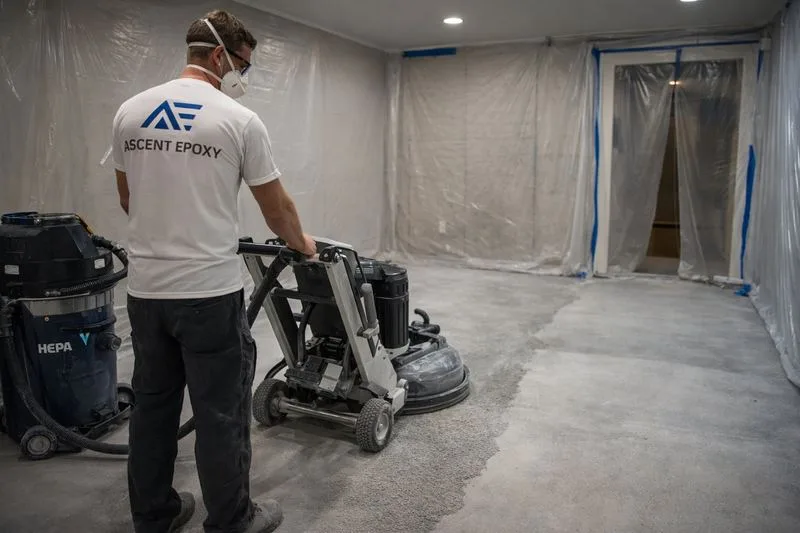
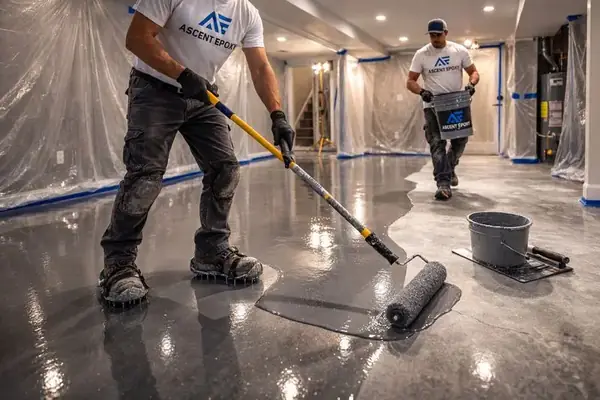
First comes the moisture check — below-grade slabs can hold more than you'd expect, and the reading tells us whether a moisture-blocking primer is needed. Then diamond grinding opens the surface and takes off old paint, sealer and stains so the coating can bond.
Crack Repair
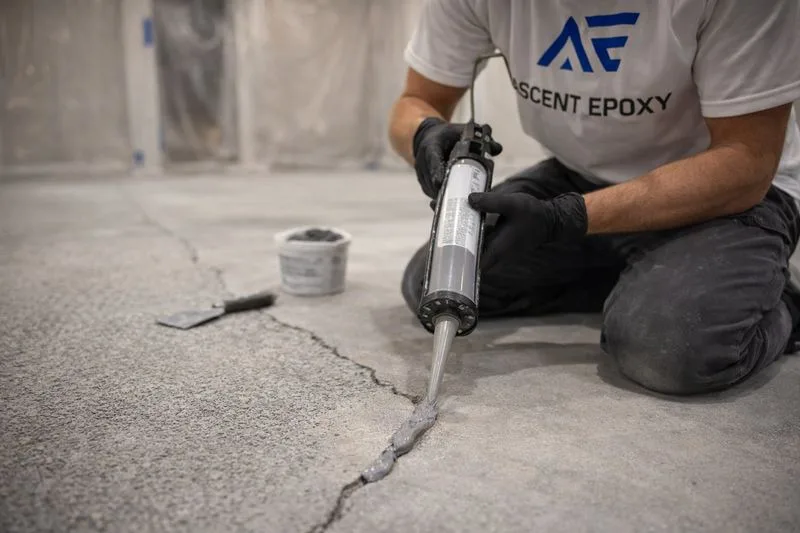
Older slabs collect cracks, chips and patches over the decades. We open up the cracks and fill them, and the low spots, with flexible polyurea. A crack that is still moving gets pointed out to you first — a coating will not hold a shifting slab together.
Primer, Color & Top Coat
Then come the primer, the color or flake coat, and a clear top coat. In a muggy July basement or a cold January garage we watch slab temperature against the dew point so every layer bonds properly.
Cure & Walkthrough
Light foot traffic is fine after about 24 hours. Most residential projects are done in one day; some take two. You get simple care tips — in a garage, squeegee the brine out before it dries — and a clear walkthrough of when the room is ready to use.
Ready to Start? Step 1 Is Free.
Book a free, no-obligation visit and talk through finishes for your own space.
Finish Options for Basements, Garages and More
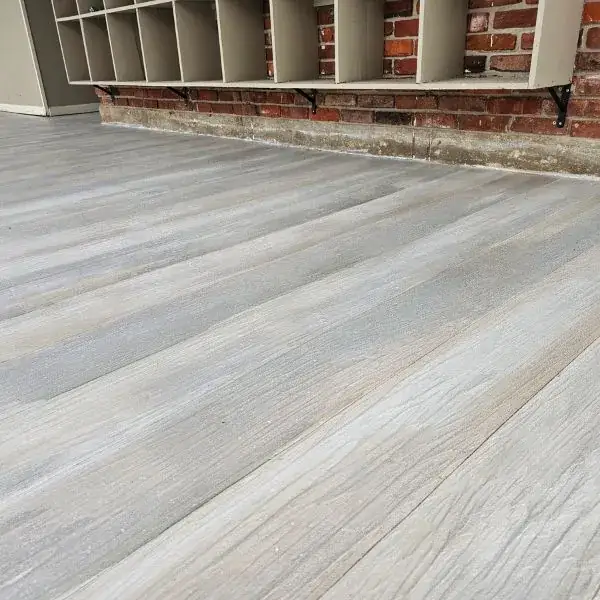
From a metallic rec room to a no-nonsense laundry floor, every system finishes with a clear, tough top coat.
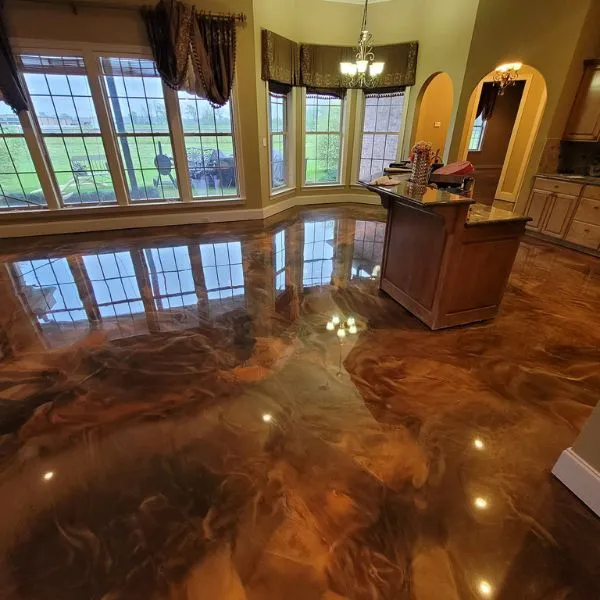
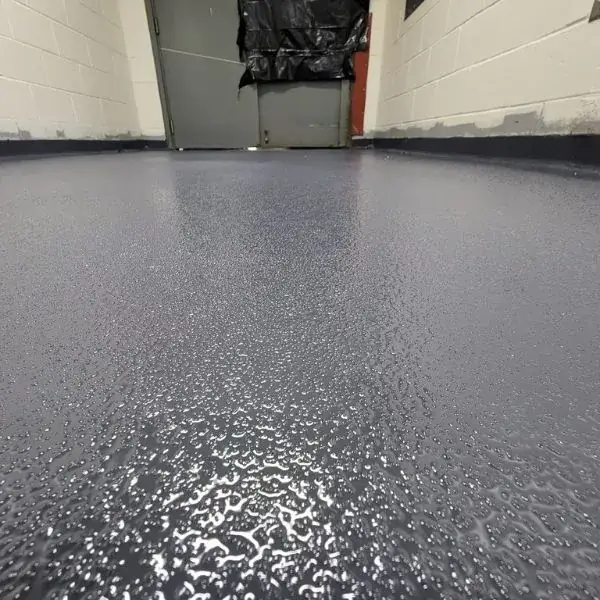
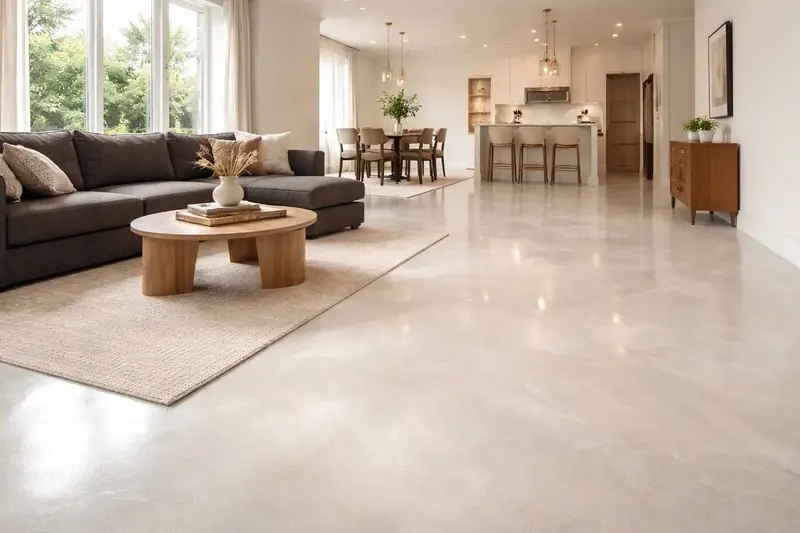
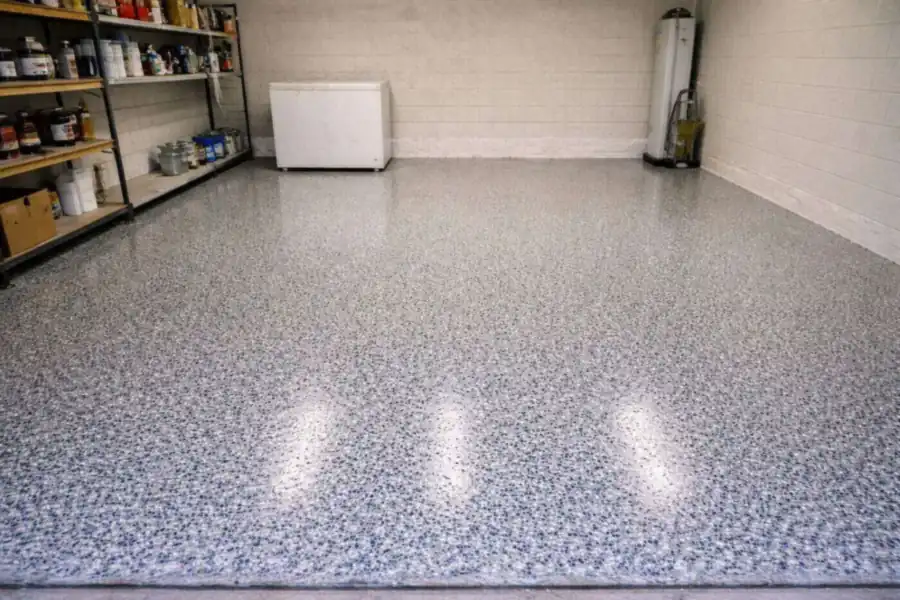
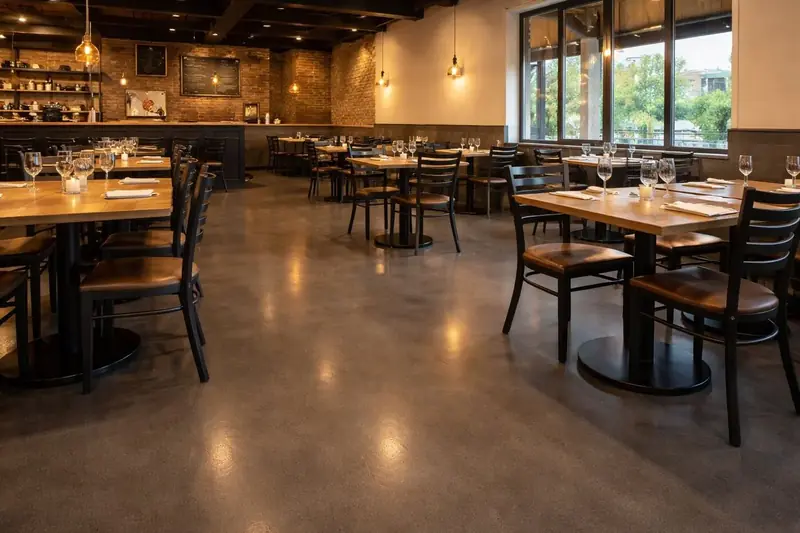
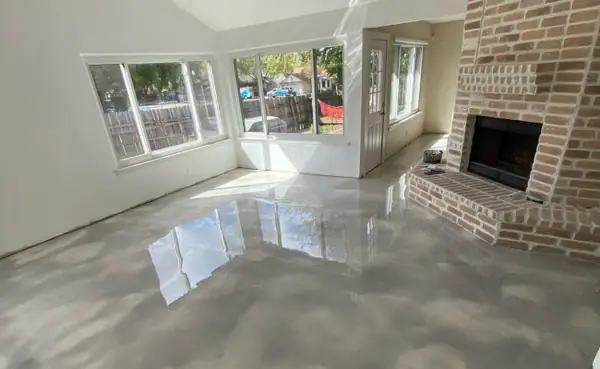
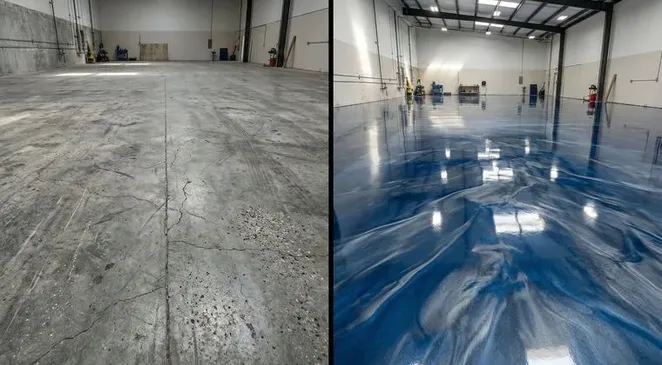
Home Floor Finish Examples
Examples of the basement, garage and interior finishes we offer. We go through them with you at the free estimate.
Home Floor Coating Questions
What St. Louis homeowners ask us most about basement, garage and driveway coatings.
Typical, not a quote: a basement floor runs about $6–$9 per square foot in the St. Louis area, and a flake garage floor with a polyaspartic top coat about $5–$9 per square foot — roughly $2,400–$4,600 for most 2-car garages. Cracks, moisture work and the finish you choose move the number. Call us at (314) 334-1902 and we'll quote your floor after seeing it.
Often, yes — three of our Google reviews are for basement floors. The key is the moisture check: below-grade concrete can hold water vapor, so we test first and use a moisture-blocking primer when it's needed. A coating gives you a bright, washable floor; it does not waterproof the walls or stop a sewer backup, and we'll tell you if the basement needs other work first.
Usually the old covering has to come up first so the coating bonds to bare concrete, and old paint or sealer is ground off as part of the prep. We look at what's there during the free visit and tell you what removal is involved before you decide. Call (314) 334-1902 to book the visit.
A well-prepped floor lasts for many years; how many depends on the prep, the system and how the room is used. A basement that sees socks and laundry baskets wears far more slowly than a garage taking brine and hot tires. When the top coat eventually dulls, it can be recoated rather than replaced.
Often, once the slab has dried out and been checked. We test the moisture, look for damage the water left behind, and use a moisture-blocking primer if the reading is high. If water is still getting in, that has to be fixed first — a coating is not a waterproofing system. What it does give you is a floor that is much easier to clean and disinfect if water ever comes in again. Call (314) 334-1902 for a free look at your slab.
Design your residential epoxy floor in 60 seconds.
Choose a size, a finish and a color, preview the floor, and see a typical St. Louis price range before you pick up the phone.
Open Floor Studio →