Commercial Epoxy Flooring St. Louis: Warehouses, Retail & Restaurants
Warehouses, stores, restaurants and shops across St. Louis and St. Louis County, coated on a schedule built around yours.
Business Floors for a Working St. Louis
St. Louis has a broad business base — aerospace, auto assembly, big hospital systems and a brewing tradition that goes back generations — and all of it keeps a long tier of suppliers, shops, warehouses, stores and restaurants busy. Those are the spaces we coat: warehouses, retail stores, restaurants and commercial kitchens, showrooms, auto dealership service areas and offices.
Our Google reviews from a store owner and a warehouse customer set the brief for most business floors: finish on the agreed schedule, and leave a floor that takes less effort to keep clean.
The weather has a say as well. Road crews brine and salt the streets all winter, and customers carry that slush through the front door, so entry zones get a tough, chemical-resistant top coat and anti-slip additives. Summer brings humid air and about 47 days a year at 90°F or more, both of which affect how a coating cures, so we plan install windows around the forecast. If your floor takes forklifts or heavy equipment, look at our industrial floor coatings page.
Plenty of St. Louis businesses work out of older buildings — this is a city of brick, and many storefronts and warehouses have been in service for generations. Older slabs carry patches, old coatings and sometimes moisture, which is why we check the slab for moisture before choosing a primer. We repair the cracks and grind the surface first, so the new system bonds to sound concrete instead of to whatever was on the floor before.
Spaces we coat for St. Louis businesses:
- Restaurants, taprooms and commercial kitchens
- Retail stores and showrooms — including floors that need to be ready for opening day
- Pharmacies, clinics and other health facilities
- Offices and lobbies
- Warehouses, stockrooms and shop floors
- Auto dealership showrooms and service areas
Running forklifts or heavy machinery? See our industrial floor coatings page. Commercial floors are quoted per project after a site visit; for what drives the number, see our commercial floor guide.
What a Coated Floor Does for Your Business
A floor that is easy to clean, safer underfoot and installed without upending your week.
Your schedule
Work Planned Around You
We plan the job around your hours and, on larger floors, work in sections so part of the space stays usable. Give us your date and we plan the floor around it.
Seamless
Easier to Keep Clean
A seamless, non-porous surface has no grout lines or open pores for grease and grime to settle into. Daily cleanup goes faster in a kitchen, a stockroom or on a sales floor.
Spills
Stands Up to Spills
Brine and slush from the door, fryer oil, cleaning chemicals, brake fluid in a service area — chemical-resistant coatings keep them on the surface, where they wipe away, instead of staining bare concrete.
Traction
Better Footing When It's Wet
Anti-slip additives are available for every coating we install. We put them where floors get slick: the vestibule in winter, the kitchen line, the loading door.
Light
A Brighter Space
A glossy coated floor bounces light around a stockroom, showroom or warehouse aisle, and a solid or flake color can match your brand. A clean, finished floor is one of the first things customers see.
Read our commercial floor guide →UV-stable
Holds Its Color by the Window
Plain epoxy can amber in sunlight. Polyaspartic top coats are UV-stable, so a floor behind a storefront window keeps its color, and it never needs waxing or stripping.
How commercial pricing works →From First Visit to Back in Business
Five steps, planned around your operating hours and the condition of your slab.
Consultation & Site Assessment
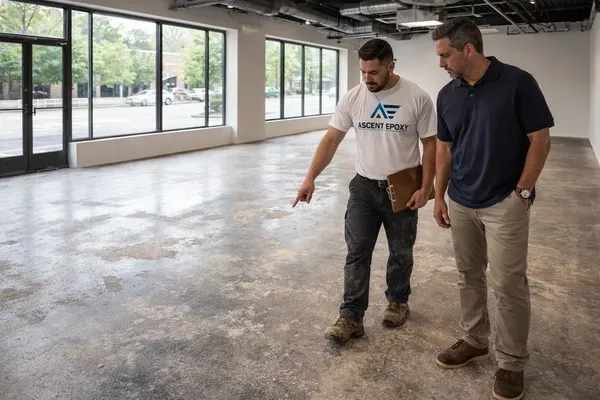
Vince or one of his crew walks your space with you, looks over the existing slab — cracks, old coverings, the entry zones that take winter slush — measures it, and asks about your busiest hours so the work can be planned around them. Schedule yours free.
Choosing the System
We match the coating to how the room is used — quartz or urethane cement for a kitchen, flake for a store or office, a crisp solid color for a showroom — choosing the primer, color coat, anti-slip additives and top coat. Larger floors get a section-by-section schedule so part of the space can stay in use.
Surface Preparation
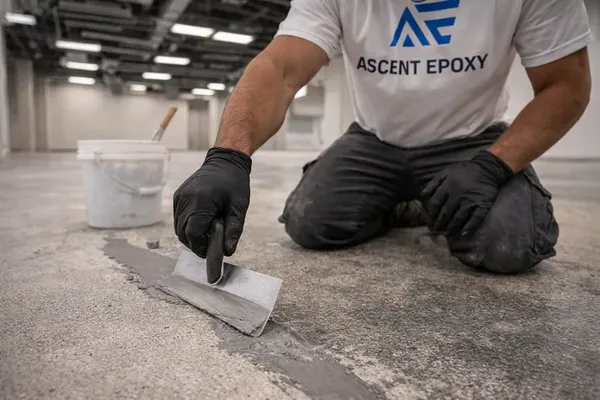
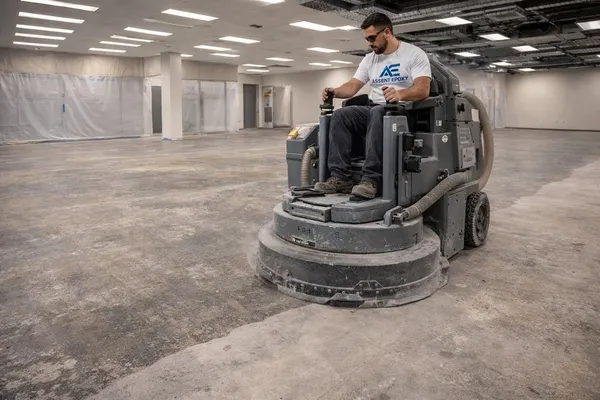
We diamond-grind the concrete so the coating bonds mechanically, then repair the cracks and chipped areas an older slab collects. We also run a moisture check before choosing the primer, since older and below-grade slabs can hold more moisture than they show.
Multi-Layer Application
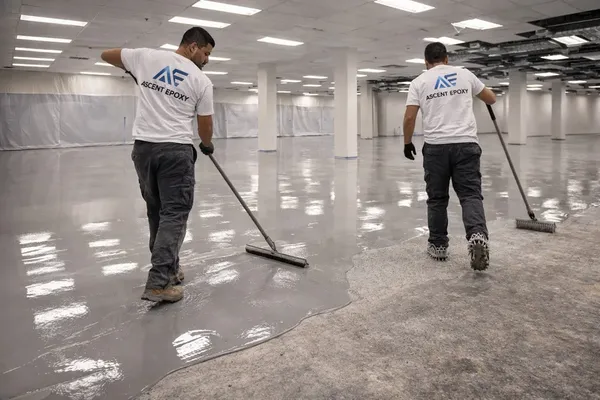
The crew applies the primer, color coat and any broadcast (flake, quartz or metallic), followed by a durable clear top coat chosen for your traffic. On phased jobs we finish one section at a time while your team works in the rest.
Final Walkthrough & Handoff
Together we walk the finished floor, check the finish, and go over a cleaning routine for your kind of business, including how to handle winter salt residue. You also get a clear datefor when the floor can take full traffic.
Ready to Start? Step 1 Is Free.
Book a free, no-obligation visit and talk through finishes for your own space.
Commercial Finish Options
Five systems, each chosen for how the space is used and how much traffic it takes.
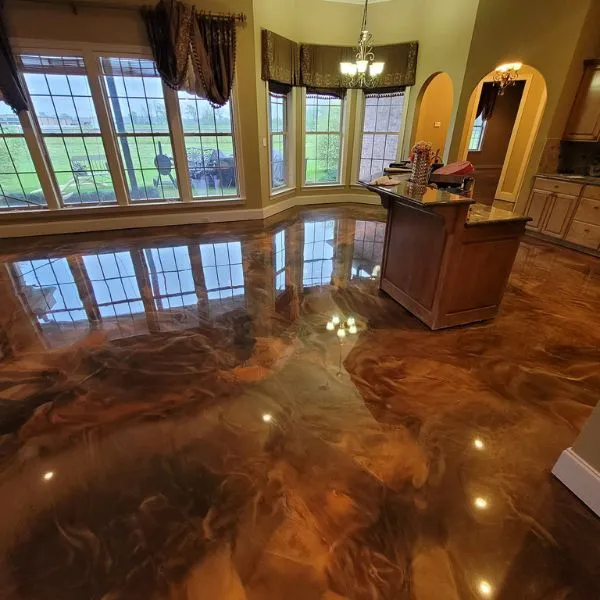
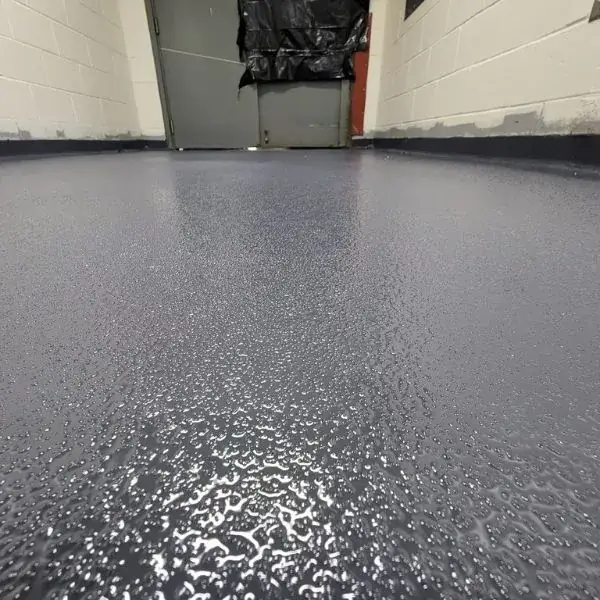
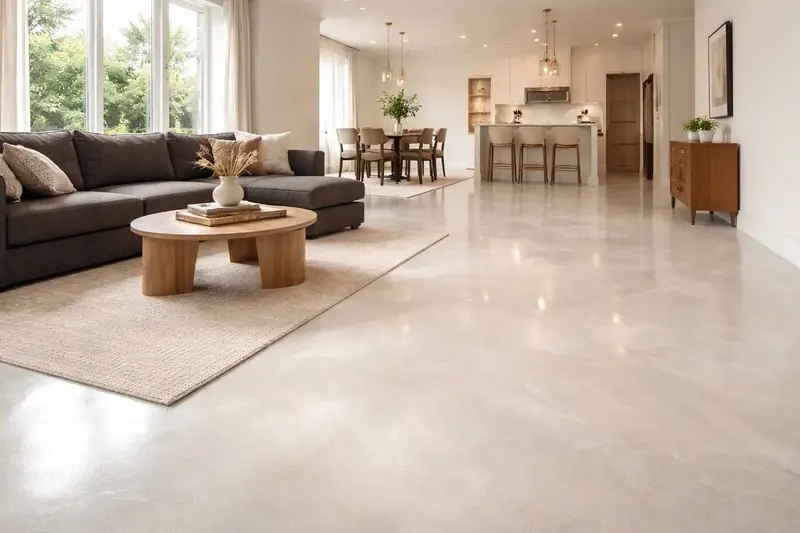
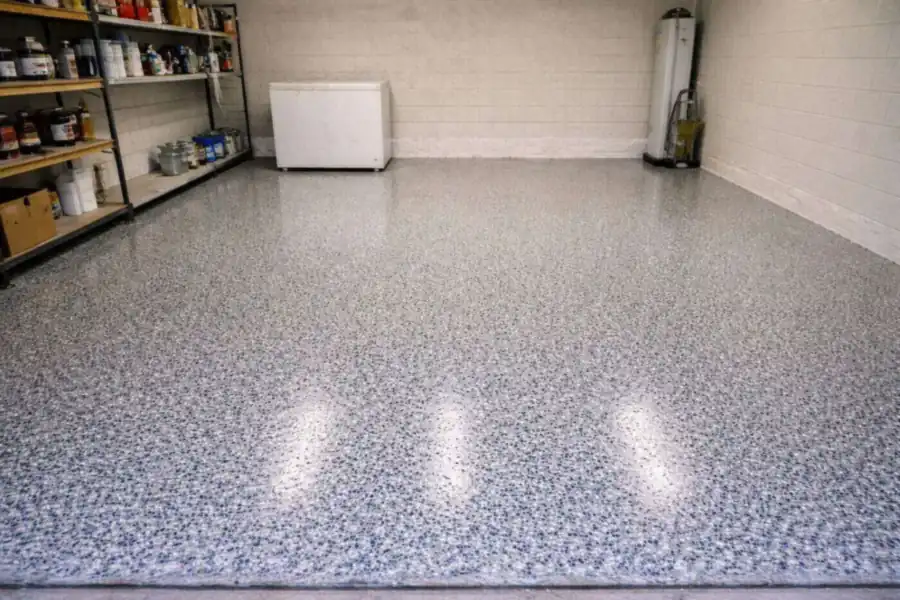
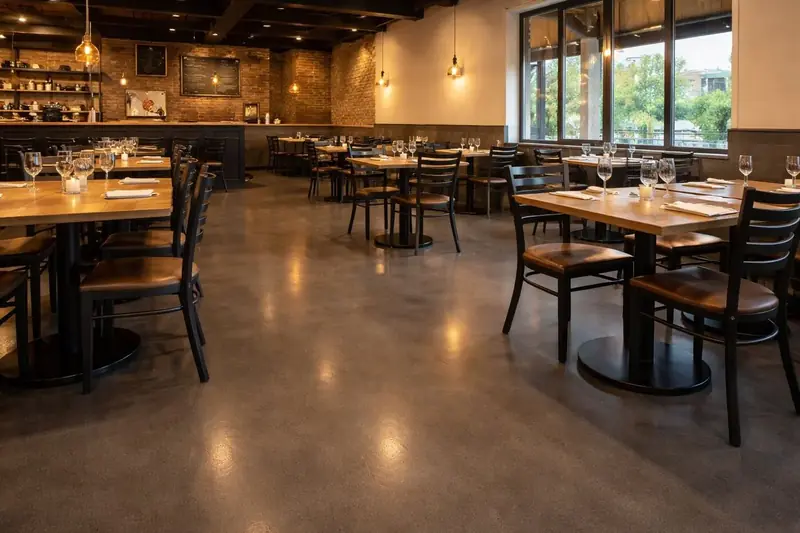
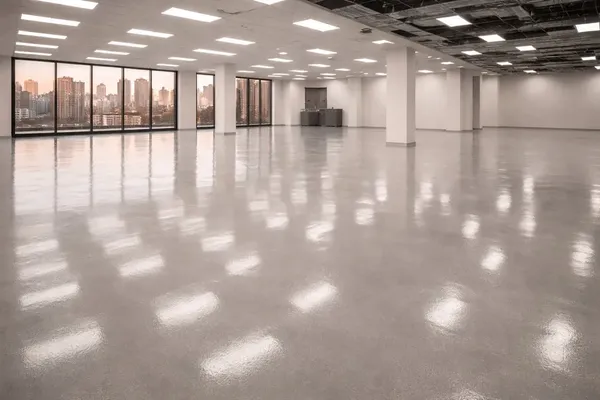
Commercial Finish Examples
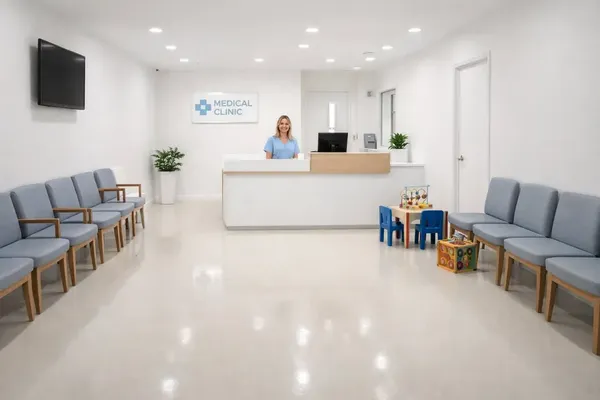
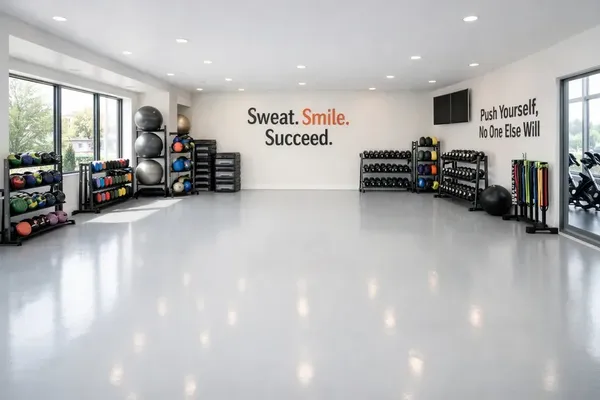
Examples of the finishes we offer for restaurants, stores, offices and shops. We'll talk through options for your space at the site visit.
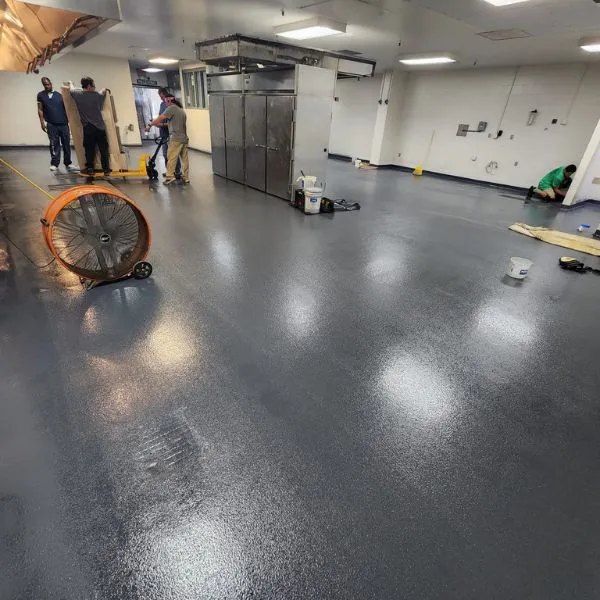
Commercial Floor Questions From St. Louis Businesses
What business owners ask before they book a commercial floor.
We quote commercial floors per project after a site visit, because size, slab condition, the coating system, the amount of repair and any phasing all change the price too much for one honest published range. The site visit and the estimate are free.
For typical home-floor prices and what drives cost, see our St. Louis price guide.
We plan every commercial job around how your business runs. Larger floors can be done in sections, so one area is finished while you keep using the rest, and we agree the schedule with you before work starts.
How long it takes depends on the square footage, the repairs needed and the system; you get a timeline with your estimate.
Yes, with the right system. Kitchens are hot, wet and greasy, so we usually look at urethane cement or a quartz-broadcast floor with anti-slip additives. The seamless surface has no grout lines to trap grease, which makes daily cleanup quicker.
If your health inspector has specific floor requirements for your space, tell us at the site visit and we'll build the system to suit.
It depends on the traffic, the system thickness and how the floor is cleaned. A lobby that only sees shoes wears far more slowly than an aisle carrying hand trucks and pallets.
When the top coat wears in the busiest lanes, it can usually be recoated without tearing out the whole floor.
We cover St. Louis and St. Louis County, from the city out along I-64 (Highway 40) and I-270 to West County, on the Missouri side.
That includes Clayton, Maryland Heights, Creve Coeur, Kirkwood, Chesterfield, Fenton, Florissant and Brentwood, among others. Visit our service areas page for the full list.
Design your commercial epoxy floor in 60 seconds.
Choose a size, a finish and a color, preview the floor, and see a typical St. Louis price range before you pick up the phone.
Open Floor Studio →