Epoxy Floor Repair St. Louis: Fix, Recoat & Restore Failing Floors
Peeling at the garage door, blisters on a basement slab, a worn-out top coat on a shop floor — we find out why the coating failed, repair the concrete and recoat it so it holds.
Why Coated Floors Fail in St. Louis — and How We Make the Recoat Hold
A failing floor coating usually tells you what went wrong, if you know how to read it. Edges lifting at the garage door point to salt and meltwater getting under a thin coat. Bubbles or blisters on a basement slab point to moisture coming up from below. Patches peeling where the car parks point to hot-tire pickup on a soft coating. And a floor that flakes off in sheets almost always comes back to prep — the concrete was never ground or cleaned well enough for anything to bond.
St. Louis gives each of those failures plenty of chances. MoDOT pre-treats the highways with salt brine and beet juice, and city crews add a magnesium/calcium chloride liquid to their salt, so a garage threshold spends the winter wet with deicer. Lambert logs about 85 freezing nights a year and about 47 days at 90°F or more, so the same floor goes from icy slush to hot tires within a few months. And much of the housing is old — the city's median home dates to 1938, and inner-ring suburbs like Webster Groves and Brentwood are mostly 1950s — which means older slabs, old patches and old coatings to deal with.
Then there is plain wear: a top coat dulled in the traffic lane of a store, ruts on a warehouse floor where pallet jacks turn, gouges where something heavy was dropped. Rolling a fresh coat over that without fixing the cause just repeats the failure. And if a crack keeps moving because the slab itself is settling — St. Louis County sits on karst, limestone with caves and sinkholes under much of it — that is a structural question, not a coating one, and we will tell you so before we quote.
So we diagnose before we quote. We look at where and how the coating let go, check the slab for moisture and test how well the remaining coating is holding. Then the fix matches the cause: failed areas are ground back to sound concrete, cracks and chips are filled, a moisture-blocking primer goes down if the slab needs one, and the floor is recoated with a top coat suited to the room — for a garage, usually a hot-tire-resistant polyaspartic.
Repairs We Handle
Garages, basements, stores and warehouses — the fix depends on how the floor failed and how the room is used.
Door edge
Garage Door Edge Repair
The strip by the garage door takes the most brine and meltwater, so it is often where a coating lets go first. We grind back the loose edge, repair the concrete and recoat with a polyaspartic top coat carried out to the door line.
Why door edges fail →Basement
Basement Blister Repair
Blisters and bubbles on a basement floor usually mean moisture coming up through the slab. We remove the failed coating, check the moisture and use a moisture-blocking primer before recoating. If water is actively coming in, that has to be fixed first.
Business
Store & Office Floor Recoats
A worn traffic lane in a store or a dull lobby floor rarely needs a full redo. We recoat in sections where we can and plan the work around your hours.
Warehouse
Warehouse & Shop Spot Repair
One damaged patch on a warehouse or shop floor doesn't mean the whole floor has to go. We spot-grind and rebuild forklift ruts, pallet-jack wear and chipped dock edges without taking the whole building out of use.
Care
Simple Seasonal Care
Much of a coated floor's life comes down to cleaning. Squeegee brine out of the garage before it dries, sweep grit before it scratches, and call us when the top coat starts to dull in the traffic lanes — a recoat at that point is simpler than a repair later.
Recoat < redo
Recoat Before You Tear Out
A sound slab rarely needs to come out. Grinding and recoating usually costs much less than tearing out and repouring concrete, and we'll give you an honest read on what your floor actually needs.
See typical St. Louis prices →Garage Door Threshold Repair — Fixing the Spot That Fails First
Brine-soaked slush piles up at the door, meltwater runs under it, and the coating there takes more abuse than anywhere else on the floor. When that edge starts chipping, we repair the strip on its own so one weak spot doesn't spread into the rest of the floor.
- Diamond grinding of the loose edge back to sound concrete, so the new coat bonds to the slab and not to the old failure.
- Polyaspartic edge wrap taken right out to the door line, where the brine sits longest.
- Hot-tire-resistant top coat that also handles brine, oil and the freezing and thawing of an unheated garage.
- A straight answer about whether an edge repair is enough or the whole floor is due for a recoat.
How a Repair Gets Done
Five steps that deal with why the coating failed, not just how it looks.
Free Assessment
We come out to your home or business, look closely at the failed coating, and note where and how it let go. It's free, with no obligation. Schedule yours free.
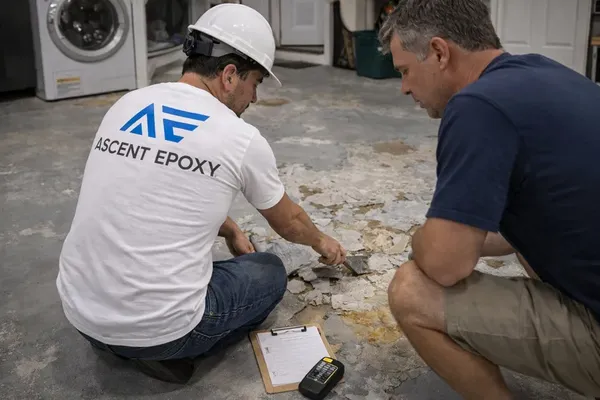
Diagnosis & Testing
We run a moisture checkand adhesion tests to find the real cause — moisture from below, poor prep, the wrong product for the room, or a mix of them.
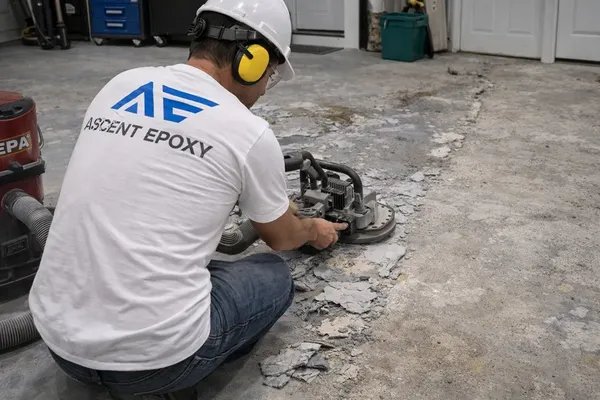
Surface Preparation
Based on what we find, we grind and recoat over sound existing coating or grind the old coating off completely, down to bare concrete. If a moisture-blocking primer is needed, it goes down at this stage.
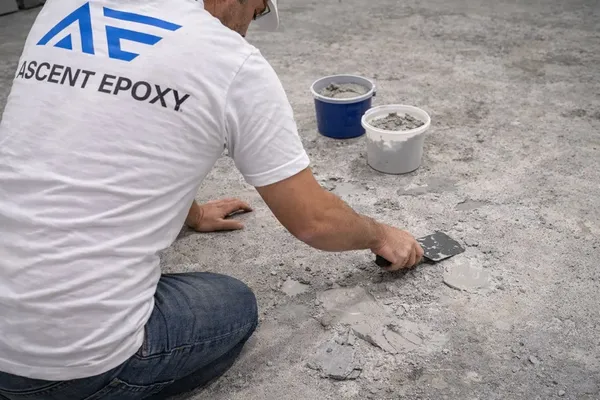
Repair & Re-Coat
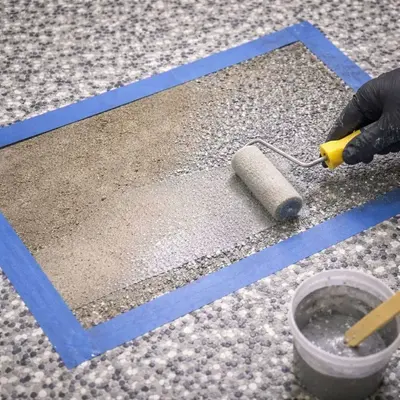
Cracks and damaged areas are filled and patched, then we apply the coating system that fits your slab and the way the room is used.
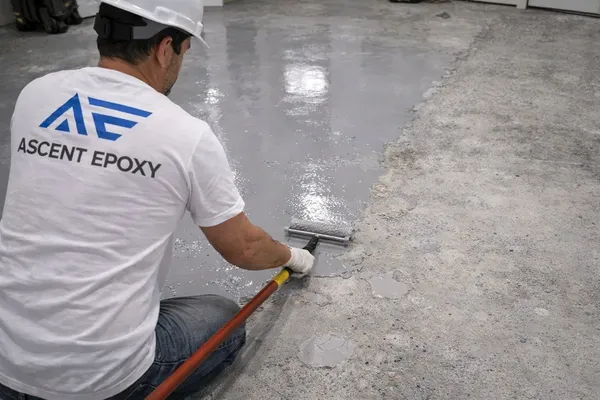
Cure & Walkthrough
We plan the cure around the day's temperature and humidity, then give you a walkthrough and simple care tips so the new coating lasts.
Ready to Start? Step 1 Is Free.
Book a free assessment and we'll find out why your coating failed.
Keep Your Old Look or Change It
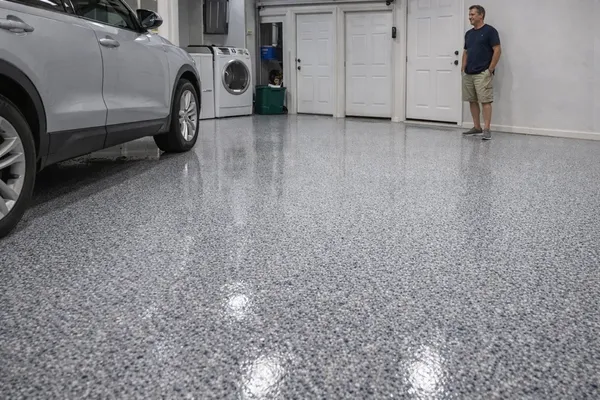
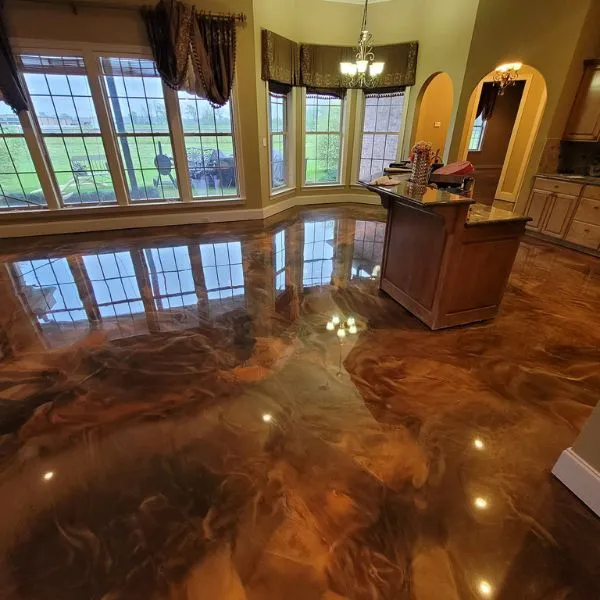
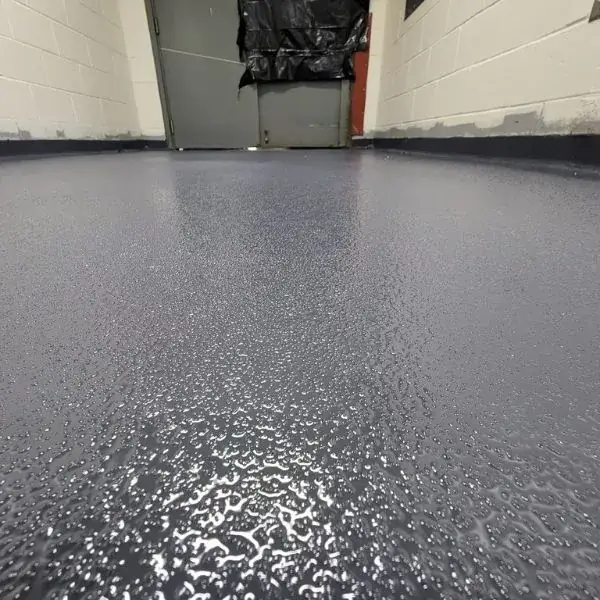
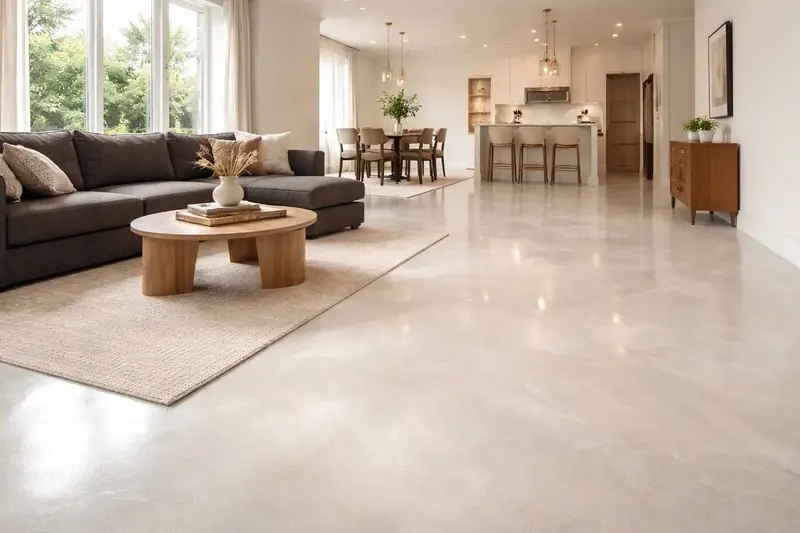
A recoat is a chance to change the look. Match the finish you had, or move to one of these five systems.
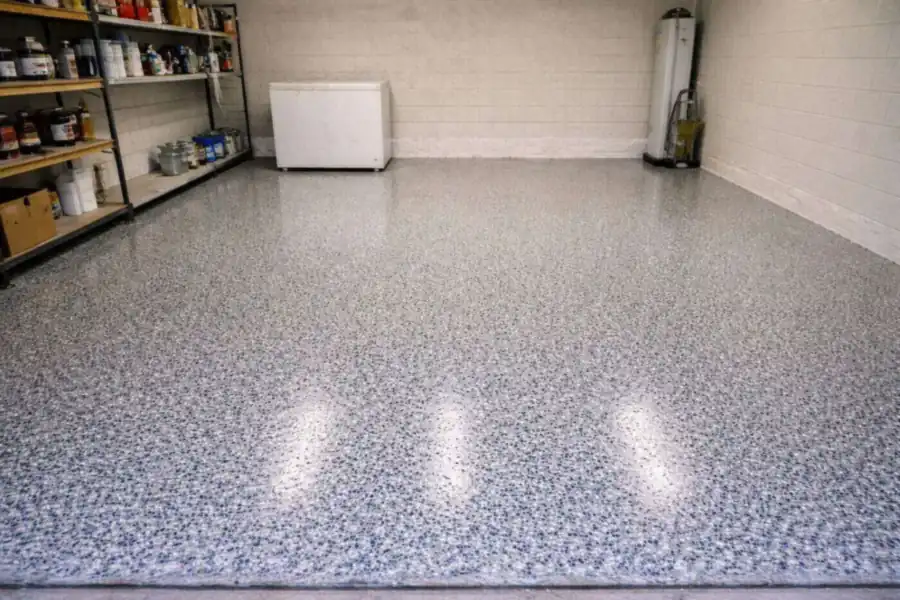
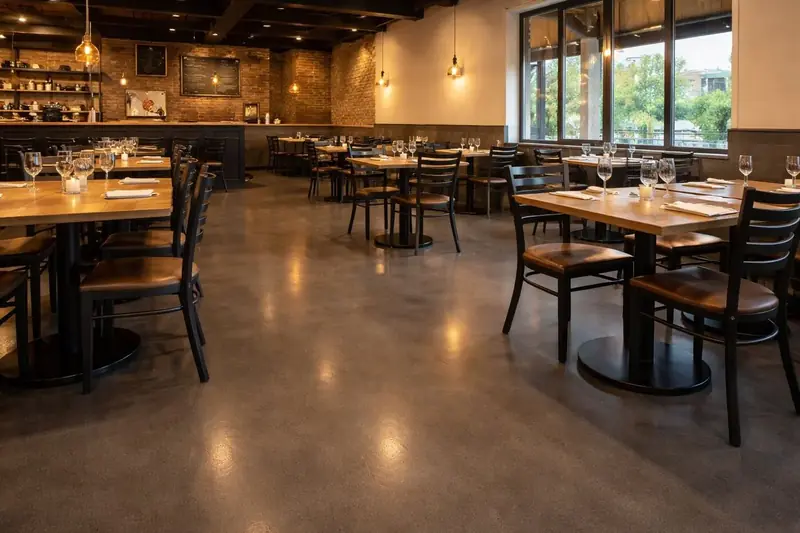
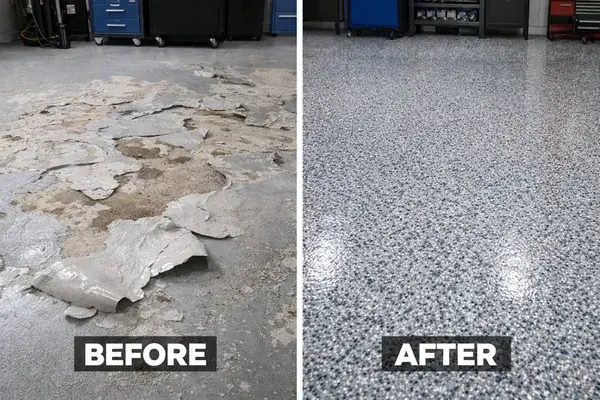
Repair and Recoat Examples
What a repair and recoat can look like, before and after. We'll talk through your floor at the free assessment.
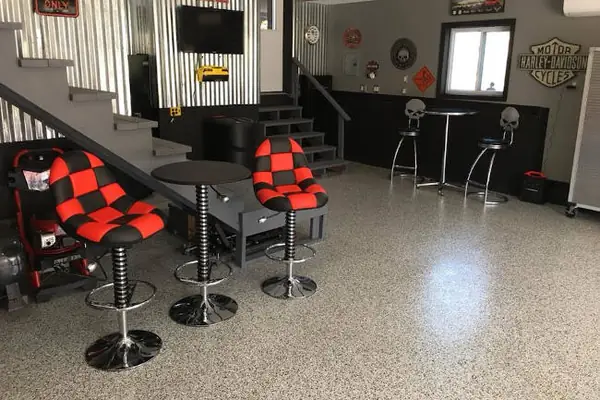
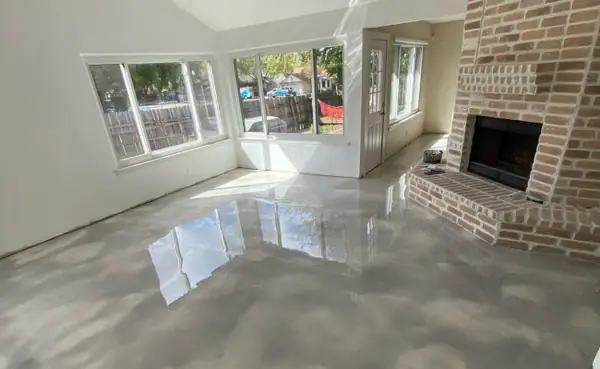
Floor Repair Questions
What St. Louis homeowners and businesses ask us about fixing a failed floor coating.
Usually one of four things: moisture coming up through the slab, salt and meltwater getting under the edge at the door, hot tires pulling up a soft coating, or a slab that wasn't ground and cleaned well enough for anything to bond. Many floors show more than one.
Older slabs and floors that have been through a water event are more likely to have moisture problems, so we check the slab before recommending a repair.
Sometimes. If the old coating is still firmly attached, we can grind it and recoat over it. If it is lifting, contaminated or was laid over a moisture problem, it has to come off down to bare concrete, or the new coat will fail the same way.
We check adhesion and moisture on site before recommending either route.
It depends on how much of the floor has failed, the square footage, whether a full strip is needed and whether the slab needs a moisture-blocking primer. A small edge repair costs far less than a full recoat, and a recoat usually costs less than a new floor from scratch.
The assessment is free, and you get the price in writing before any work starts. Typical St. Louis prices for new floors are a useful point of comparison.
Often, yes. We check the slab, remove the failed coating and use a moisture-blocking primer before recoating. If water is actively coming in — through cracks, from a backup or from outside — that needs fixing first, because no floor coating is waterproofing.
Dealing with the cause first is what keeps the new coating from failing the same way again.
Keep grit off it and clean it regularly. In a garage, squeegee out brine and salt slush before it dries; in a business, a dust mop and a neutral cleaner do most of the work. Avoid harsh solvents unless the system is rated for them.
When the top coat starts to dull in the busiest lanes, call us — a recoat at that stage is much simpler than a repair later.
Design your epoxy floor in 60 seconds.
Choose a size, a finish and a color, preview the floor, and see a typical St. Louis price range before you pick up the phone.
Open Floor Studio →