Garage Floor Epoxy St. Louis: Built for Brine & Hot Tires
From a 1930s garage off a city alley to a 1990s three-car bay in Wildwood, we grind, repair and seal St. Louis garage slabs to take beet-juice brine in January and hot tires in July.
What a St. Louis Garage Floor Goes Through in a Year
A St. Louis garage slab takes it from both ends of the calendar. In winter, MoDOT pre-treats the highways with salt brine mixed with beet juice, and city crews add a liquid magnesium/calcium chloride to their salt so it keeps working in deeper cold. All of it rides home on your tires and drips off the wheel wells onto the concrete. Then summer shows up: about 47 days a year hit 90°F or more at Lambert, and a car fresh off I-270 or Highway 40 parks its hot tires on that same floor.
Lambert also logs about 85 nights a year at or below freezing, and most of them thaw again by afternoon. Concrete engineers advise homeowners to hose deicer off garage slabs because salt speeds up the surface scaling that freezing and thawing start. A sealed floor keeps that slush on top, where a squeegee pushes it out the door. We look hardest at the threshold, since it soaks up the most meltwater.
Which part of town you live in matters too. St. Louis has three rings of housing: the city, where the median home dates to 1938 and many garages sit behind the house on the alley; the post-war inner ring, from University City out to Kirkwood; and West County, where Wildwood's median home was built in 1992. An old alley-garage slab usually needs patching and grinding before anything else. A newer suburban slab usually just needs protecting before it starts to stain and pit.
So every garage starts the same way. We check the slab for moisture and movement, diamond-grind it to open the surface, and fill the cracks and chipped spots. If a crack is still moving, we tell you before we coat. Then the color layer goes down, flake or metallic, sealed under a hot-tire-resistant polyaspartic top coat that also shrugs off brine and oil. The same chemistry goes into our basement and home floors, built heavier where a car parks. Every prep step is listed on your written quote. Compare it with our residential floors and recoat and repair services, or check the St. Louis price guide for typical costs.
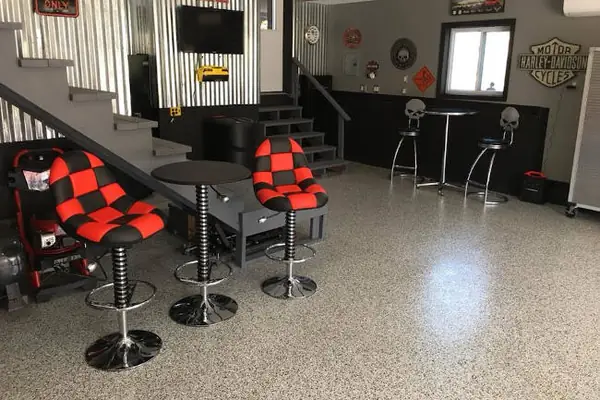 Before
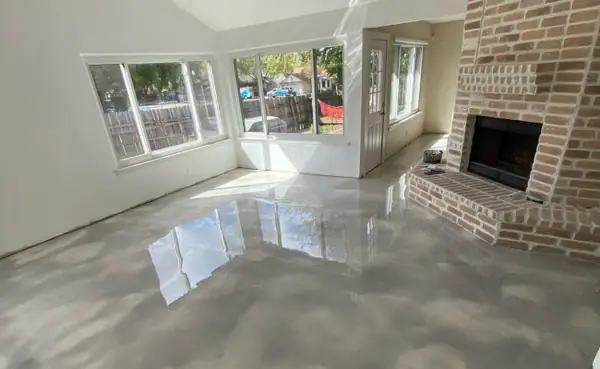 After
After
What You Get From a Coated Garage Floor
Beyond the shine, here is what the floor does for you from January brine to July heat.
July
Hot Tires, Then Brine
July in St. Louis averages a high near 90°F, and tires come off the highway hotter than the air. Soft, cheap coatings can soften and lift under them. Our polyaspartic top coat is made to take hot tires, then brine and oil once winter comes back.
Why garage coatings peel →Sealed
Oil and Brine Stay on Top
A dripping oil pan, spilled washer fluid, the gray film that falls off the undercarriage after a brined commute — it all sits on a sealed, non-porous surface instead of soaking into the slab, and a rag takes it up.
Grip
Traction When It Is Wet
Wet tires, melting slush and a summer storm blowing in under the door all make a smooth floor slick. Flake texture and anti-slip additives, available with every coating we install, give your shoes something to hold.
Thaw
Built for Freeze and Thaw
Flexible polyurea in the cracks and a top coat that gives a little let the floor ride out each freeze and thaw at the joints.
Squeegee
Easy Winter Cleanup
When salt rings dry on the floor after a February melt, a squeegee, a mop and warm water clear them. There is no wax and no yearly resealing — just a seamless surface without pores for grime to settle into.
Checked
Moisture Checked First
Damp rising through a slab can lift any coating. We check the slab for moisture before we quote, use a moisture-blocking primer when it needs one, and tell you if it needs other work first.
How a St. Louis Garage Floor Goes In
Five steps from the first visit to a floor you can use, starting with a close look at your slab.
Free Visit & Written Quote
Vince or one of his crew comes to your garage, measures the floor, looks over cracks, stains and moisture, and shows you finish options. You get a written quote, not a number scribbled on a card. Schedule yours free.
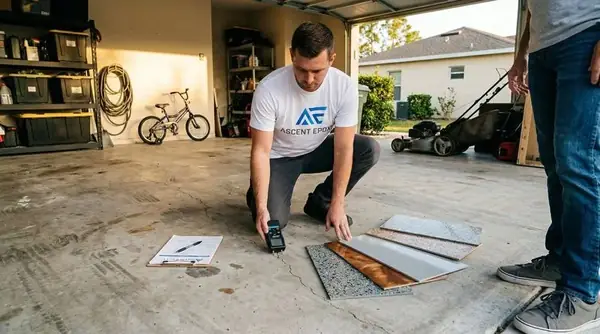
Surface Preparation
Diamond grinding takes off the weak top skin and any old sealer so the coating can bond. We also check the slab for moisture, because humid St. Louis summers and older slabs can both hide it.
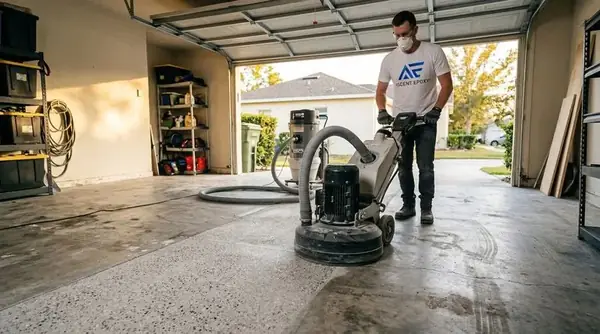
Crack & Joint Repair
We fill cracks, chipped spots and control joints with a flexible polyurea filler. If a crack is still moving, we say so first — a floor coating does not stop a slab from shifting.
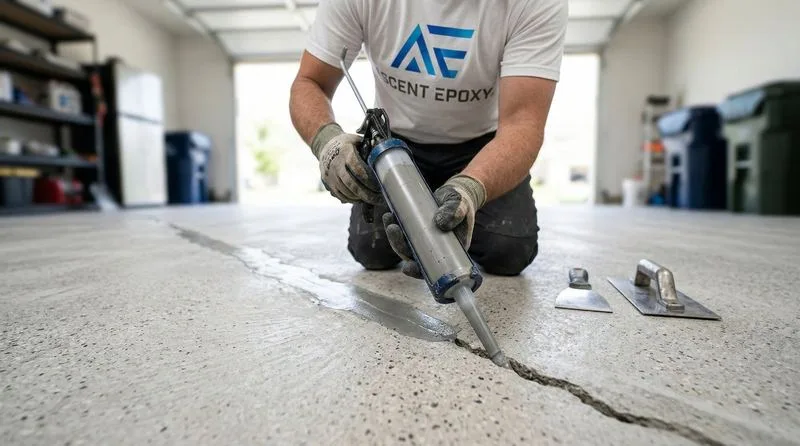
Primer, Color & Top Coat
Next comes a primer (moisture-blocking if the check calls for it), the epoxy color coat with flake or metallic pigment, and a polyaspartic top coat that stands up to hot tires, brine and wear.
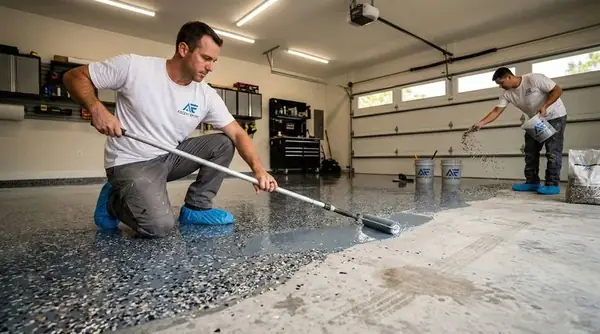
Cure & Walkthrough
You can walk on it after about 24 hours. Before we leave, we walk the floor with you, hand over care instructions and tell you when to park on it.
Ready to Start? Step 1 Is Free.
Book a free, no-obligation visit and talk through finishes for your own space.
Finish and Color Options for Your Garage
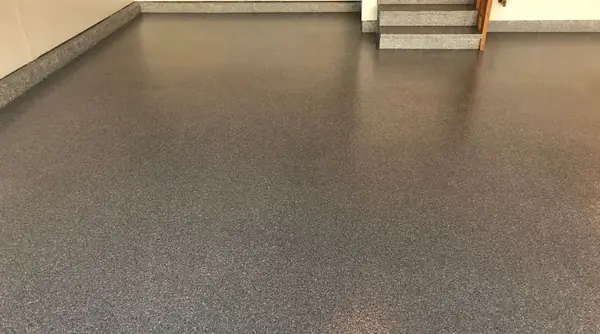
Gray is only the starting point. Pick from five looks, each finished with a clear top coat that stands up to hot tires and road salt.
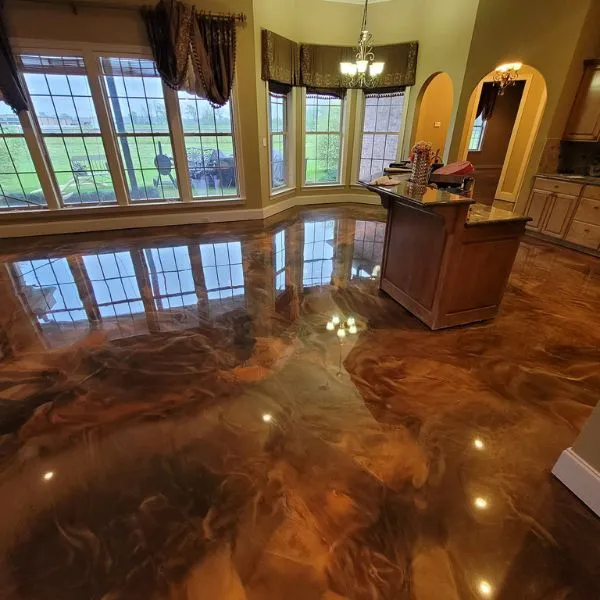
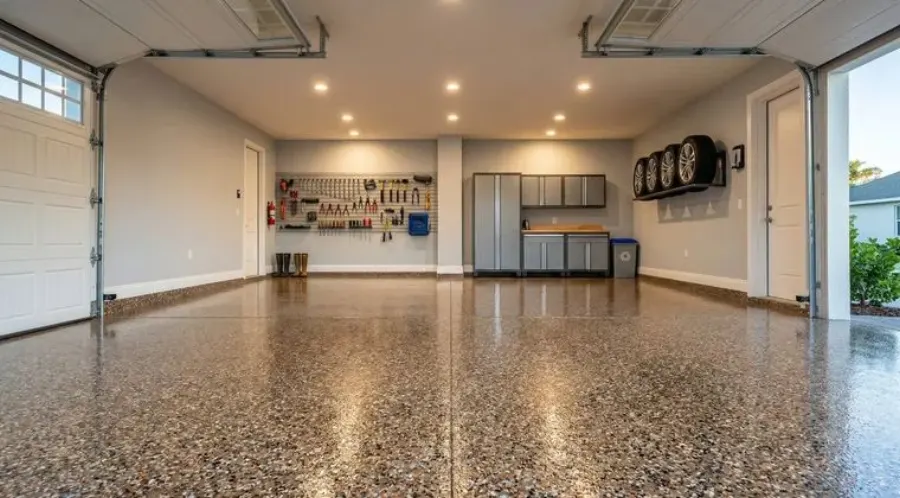
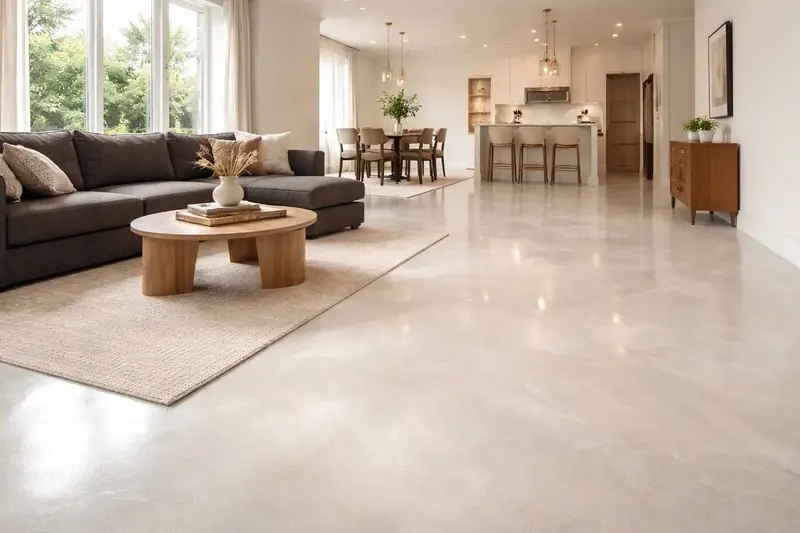
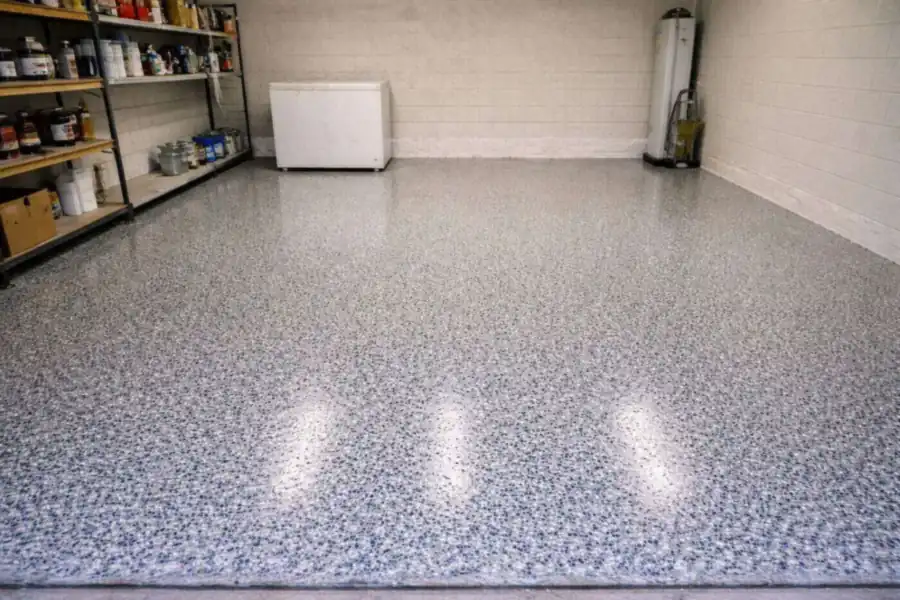
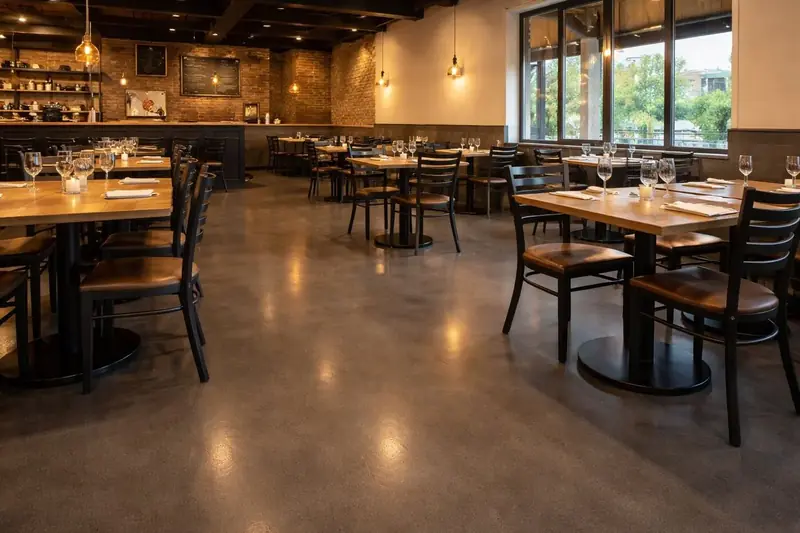
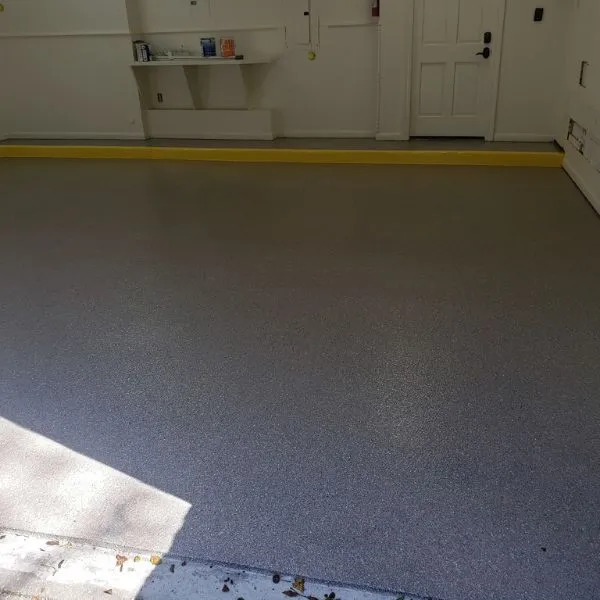
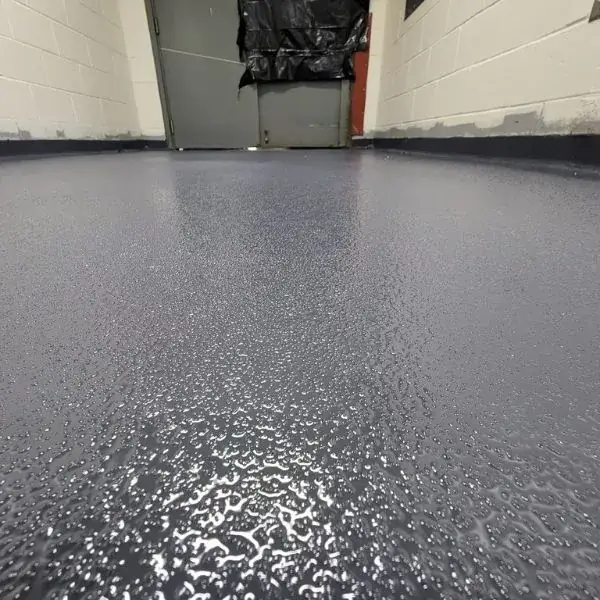
Garage Finish Examples
A few of the looks you can choose for a garage floor. We go through each one with you at the free estimate.
St. Louis Garage Floor Questions
Straight answers to what St. Louis homeowners ask us most about garage coatings.
Typical, not a quote: a flake floor with a polyaspartic top coat runs about $5–$9 per square foot in the St. Louis area. That works out to about $2,400–$4,600 for most 2-car garages and about $3,600–$7,000 for a 3-car. Cracks, moisture and the finish you choose move the price, so we quote each floor after seeing it. More detail is in our St. Louis price guide.
Mostly in summer. July dew points in St. Louis average in the upper 60s and reach the mid-70s on muggy days, and resin should not go down on a slab that is close to the dew point or sweating. Heat also shortens the working time of the mix. We check the slab's temperature and moisture before we start and plan humid-day installs around them. If the slab needs a moisture-blocking primer, it goes down first.
It depends more on the prep than on the label: how well the slab was ground, whether moisture was dealt with, which system went down and how hard the garage works. A properly prepped floor with a polyaspartic top coat holds up for many years, and when the top coat finally wears it can be recoated without starting over. We give you an honest read on your slab at the estimate.
You can walk on it lightly after about 24 hours. When the car can come back in depends on the coating system and the temperature, and we give you that date at the final walkthrough. Most residential projects are finished in one day; some take two.
Floors can go down in any season with the right planning. Spring and fall are the easiest, with mild temperatures and lower humidity. Summer installs need a close eye on heat and dew point, and winter installs need a slab warm enough to cure; we plan for both at the estimate. If you want the floor sealed before brine season, book in the fall.
Design your garage floor in 60 seconds.
Choose a size, a finish and a color, preview the floor, and see a typical St. Louis price range before you pick up the phone.
Open Floor Studio →