Industrial Epoxy Flooring St. Louis: Warehouses, Shops & Plant Floors
Warehouse aisles, production floors, shops and service bays across St. Louis and St. Louis County, coated with chemical-resistant systems and quoted per project after a site visit.
Floors for the Places St. Louis Makes and Moves Things
St. Louis has long built and shipped things. Big aerospace and auto plants anchor the region, and around them sits a whole network of suppliers, machine shops and warehouses. Those floors — warehouse aisles, production areas, fabrication and maintenance shops — are what this page is about, and they need more than the finish we put down on commercial floors for stores and offices.
No two of these floors ask for the same thing. A distribution warehouse needs aisles that take forklift turns all shift. A production room may see oils, solvents or cleaning chemicals. A wash-down room needs a floor that copes with hot water and thermal shock, which is where urethane cement comes in. A maintenance bay needs grip around oil and brake fluid. One of our Google reviewers had their industrial warehouse floors coated and said it made them much easier to clean and maintain; another had a shop floor done and called it a super clean job with no mess.
Local weather plays its part. Trucks and forklifts drag in brine and road salt through the winter, and dock doors let in the cold on about 85 freezing nights a year. In summer, heat and humidity — about 47 days a year reach 90°F at Lambert — change how a coating cures across a big slab. Older industrial buildings can also have slabs that hold moisture. So every job starts with a site visit: we check the slab for moisture, repair cracks and failed joints, diamond-grind the surface and choose the system for the room, then schedule the work in phases if you need to keep running.
Coating a store, office or restaurant instead? See our page on commercial floors and retail spaces.
What an Industrial Floor Has to Handle Here
Forklift traffic, chemicals, wash-downs, tracked-in brine and summer humidity — the system is matched to your room and your slab.
Chemicals
Chemical Resistant
Cutting fluids, solvents, oils, fuels and cleaning chemicals — we match the resin and top coat to what actually spills on your floor, and we'll talk through specialty chemical-resistant options when standard epoxy isn't enough.
Traffic
Built for Forklift Traffic
Forklifts pivot on the same turns, pallet jacks run the same lanes, and racking loads sit on small footprints all day. A well-adhered, thick-build system takes that wear far better than bare concrete, which dusts and spalls under it.
Grip
Anti-Slip Where It Matters
A wash-down area, a dock door in January slush, an oily maintenance bay — anti-slip additives are available for every coating we install, so we can add grip exactly where floors get slick.
Lines
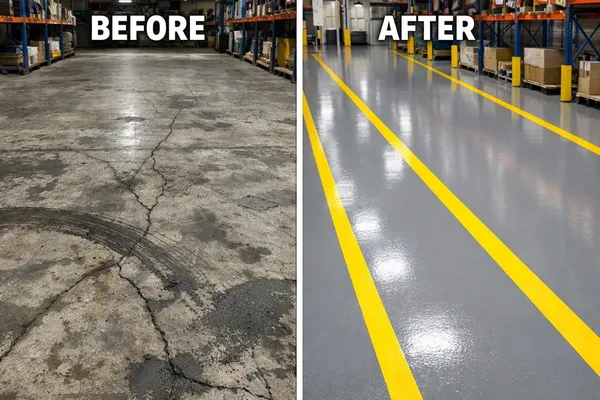
Lane Marking — Ask Us
Want aisle lanes, walkways or color-coded zones on the new floor? Tell us at the site visit and we'll include them in the plan and the quote if they suit your system.
Specialty
Specialty Needs
Static-sensitive electronics, labs and unusual chemical exposure call for specialty systems. Ask at the site visit and we'll tell you honestly what we can install for your space.
Recoat
Planned for the Long Run
A floor that was ground, moisture-checked and repaired before coating lasts far longer than one rolled onto dirty concrete. When the busiest lanes eventually wear, the top coat can be renewed without tearing out the floor.
Why coatings fail on cold, salty floors →How a Warehouse Floor Gets Done
Five steps from the first walk-through to a cured floor your crew can use. Larger facilities can be done in phases so the rest of the building keeps working.
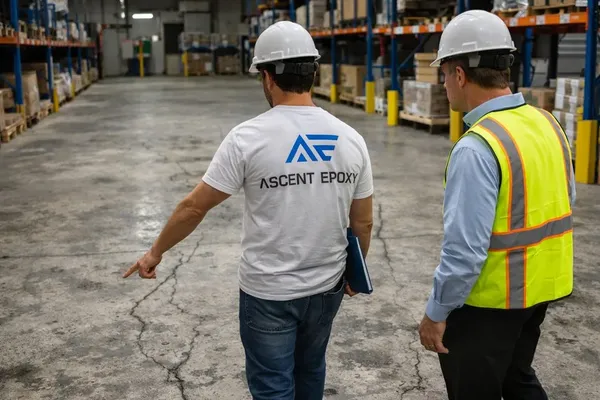
Facility Assessment
We walk the whole facility, check the slab for moisture in several areas, note cracked joints and damaged spots, ask what chemicals the floor sees, and map where forklifts and people travel. Schedule yours free.
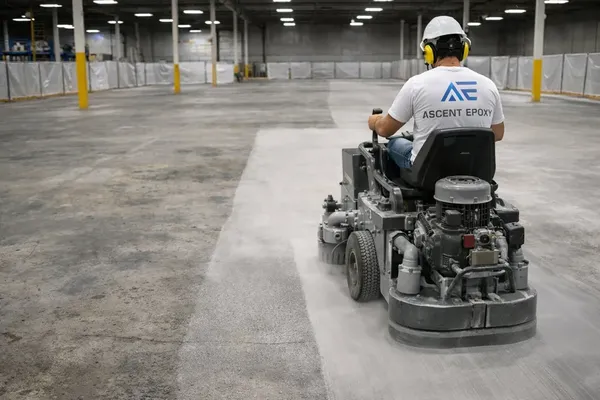
Industrial Slab Preparation
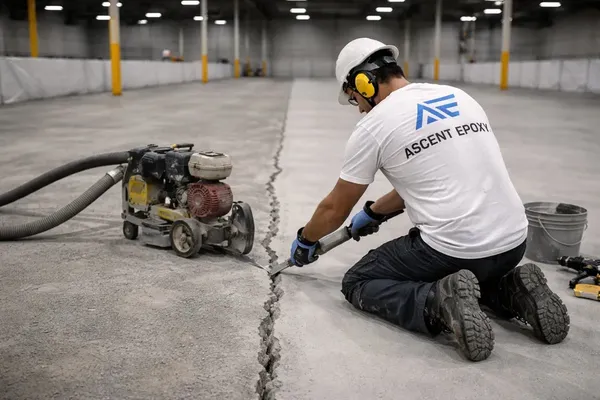
Diamond grinding across the whole floor opens the surface so the coating can bond. Cracks, chipped patches and broken joint edges are repaired first, so the new system sits on sound concrete. On big slabs the prep simply takes longer — it is not the place to save time.
Primer & Moisture Barrier
A primer goes down first to seal the slab and tie it to the layers above. Moisture-blocking primers are used where the moisture check reads high, which is more likely on older or below-grade slabs.
Coating System Application
Each room gets its own build: urethane cement for hot, wet wash-down areas, quartz broadcast or thick-build epoxy for busy warehouse aisles, polyaspartic or polyurethane top coats where UV or a fast turnaround matters, and anti-slip additives for oily or wet areas. Any lane marking you've asked for goes in at this stage.
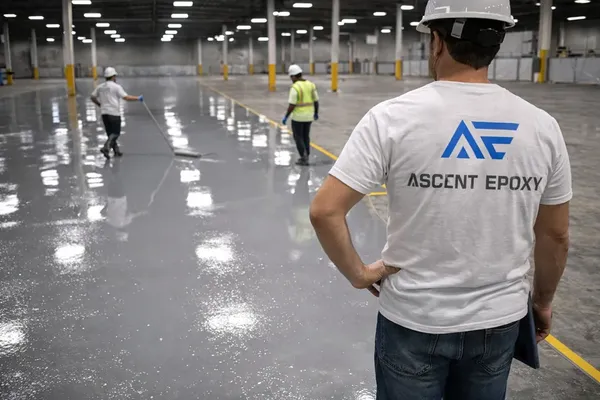
Curing & Handoff
Cure time is planned with temperature and dew point in mind — a cold slab in January or a muggy building in July both change it. We check the finished floor, then go over cleaning and upkeep with your team for the system you chose.
Ready to Start? Step 1 Is Free.
Book a free site visit and we'll walk the floor, the traffic and the chemicals with you.
Industrial Finish Examples
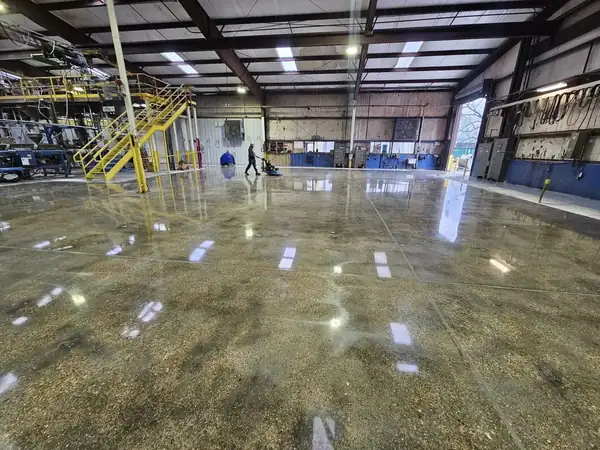
An example of an industrial floor finish. We'll go through options for your facility at the site visit.
Industrial Floor Questions
What St. Louis facility managers ask before they book.
We coat floors in many kinds of facilities across St. Louis and St. Louis County, including:
- Warehouses and distribution centers
- Production and assembly areas
- Machine and fabrication shops
- Wash-down and food-prep rooms
- Auto dealership and fleet service bays
- Stockrooms and loading areas
Every system is chosen for that room's traffic, chemicals and moisture, and every industrial job is quoted per project after a site visit.
Mostly through summer installs. July dew points here average in the upper 60s and reach the mid-70s on muggy days, and coating a slab that sits close to the dew point risks a poor bond. On a big warehouse floor, one bad day can affect thousands of square feet.
So we check the slab for moisture in several areas, use moisture-blocking primers where readings are high, and pick install days and hours with temperature and dew point in mind.
Yes, within limits we'll spell out. Standard epoxy and polyurethane top coats handle oils, grease, fuels and many cleaning chemicals.
If your floor sees concentrated acids or strong solvents, tell us exactly what they are at the site visit. We'll match a system to them, or tell you honestly if a specialty contractor is the better call.
Ask us at the site visit. Common requests include:
- Pedestrian walkways
- Forklift traffic lanes
- Hazard zones and restricted areas
- Equipment and storage outlines
- Exit routes
- Color-coded zones
If marking suits the system you choose, we'll include it in the plan and the per-project quote.
It depends on the square footage, the slab's condition and the system. A small shop floor can be quick; a large warehouse takes longer and is often done in phases.
Phasing lets you keep part of the building running while we work on another section. You get a project timeline with your estimate, so you can plan shifts and deliveries around it.
Spec your facility floor in 60 seconds.
Enter your square footage and what the floor has to handle — chemicals, forklifts, wash-down — and preview the finish before you call. Industrial floors are quoted per project after a site visit.
Open Floor Studio →