The Short Answer
For a garage you use every day, or a basement you want to turn into a real room, a professionally installed coating is usually worth it in St. Louis — provided the slab is sound and the prep is done properly. It isn't the cheapest way to cover concrete, it won't fix a moving crack, and it doesn't waterproof anything. Below are typical local prices, the pros and cons as we see them, and the situations where we'd tell you to hold off.
What It Typically Costs Here
These are typical St. Louis ranges for a professionally installed floor, based on published local and national pricing. They are not a quote: your price depends on the size and condition of your slab, and we confirm it after a free on-site estimate.
| Floor | Typical range (not a quote) |
|---|---|
| Flake system with a polyaspartic top coat | About $5–$9 per sq ft |
| 2-car garage | About $2,400–$4,600 |
| 3-car garage | About $3,600–$7,000 |
| Basement floor | About $6–$9 per sq ft |
| Commercial or industrial floor | Quoted per project after a site visit |
What pushes a garage toward the top of its range: deep cracks and spalling, an old coating or sealer that has to come off, moisture problems and decorative upgrades. A clean, sound slab lands near the bottom. Our St. Louis cost guide goes into more detail.
Where Epoxy Earns Its Keep
It handles brine season
From roughly November through March, MoDOT's beet-juice brine and the City's road salt come home on your tires. On bare concrete that salty water soaks in — the concrete industry tells homeowners to hose it off garage slabs for good reason. A sealed floor keeps it on the surface, where a squeegee and a rinse take care of it.
It stands up to summer
About 47 days a year reach 90°F at Lambert. Hot tires straight off the highway are the classic way bargain coatings fail. A properly installed system with the right top coat is built for that; a can of garage-floor paint generally isn't.
Cleaning gets easy
Oil drips, slush, sawdust and spilled paint sit on top of the coating instead of soaking into the slab, so a mop or a hose handles most messes.
Old floors look new again
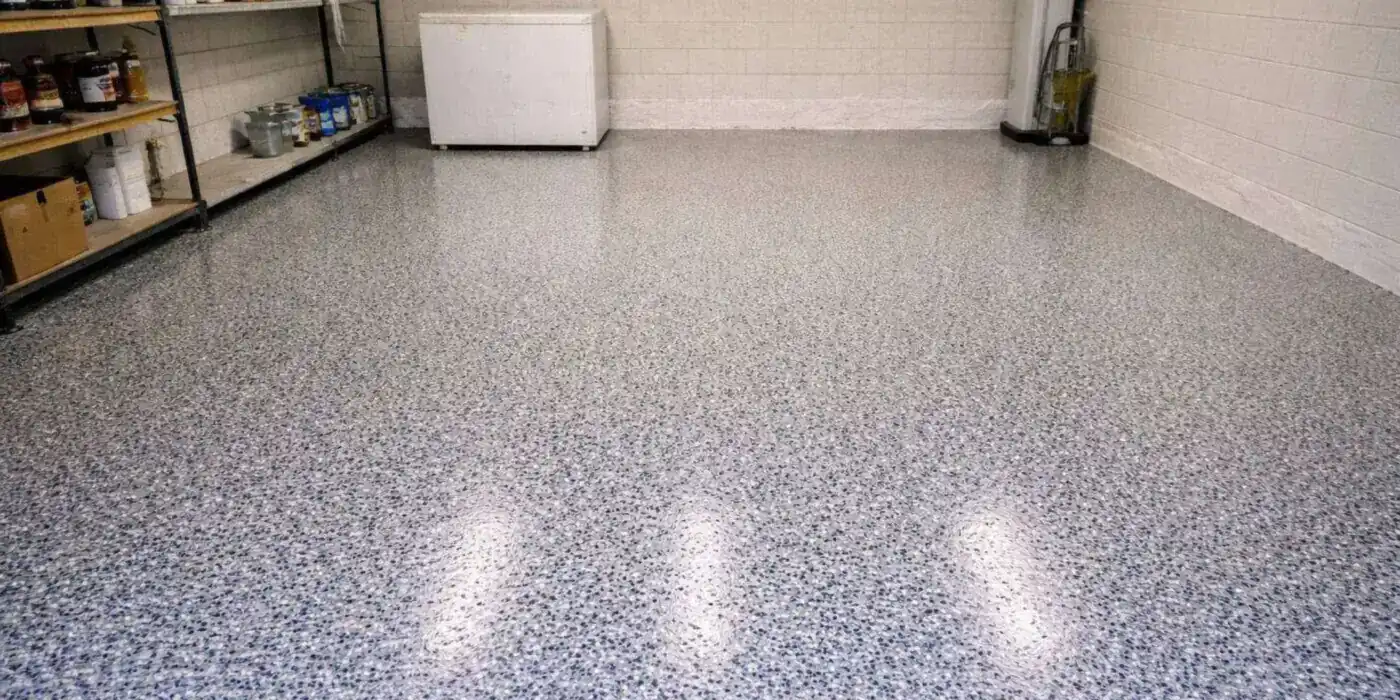
St. Louis city's median home was built in 1938, and most inner-ring suburbs are post-war. Plenty of garages and basements here carry decades of stains and patches. A flake floor hides minor imperfections and turns a dingy slab into a finished space.
It goes in fast
Most residential projects are completed in one day; some take two. Light foot traffic is usually fine within about 24 hours.
You can add grip
Anti-slip additives are available for all of our coatings, so a floor that sees snowmelt or basement humidity doesn't have to be slick.
The Downsides, Plainly
It's a real expense
A few thousand dollars for a garage is a meaningful spend. If the floor is purely cosmetic and money is tight this year, waiting is a perfectly reasonable choice.
Prep is everything
A coating only bonds to clean, open concrete. That means diamond grinding, crack repair and removing old sealers before anything goes down. Skipped prep is the most common reason coatings peel, which is why a cheap quote that leaves it out isn't really cheaper.
Moisture can rule a floor out
Water vapor coming up through a slab can push a coating off from underneath. We check the slab for moisture before coating, and if the readings aren't right, we'll tell you instead of coating anyway.
It won't fix the ground
Much of St. Louis County sits on karst, with limestone caves and sinkholes below. Some slabs crack because the ground moved. A coating can't hold together a crack that's still moving; if yours is, we'll say so before we coat and point you to a structural engineer.
It doesn't waterproof a basement
A coated basement floor is easy to mop out after water gets in, but it doesn't stop flooding or sewer backups.
Glossy floors can be slick when wet
That's what the anti-slip additive is for. Ask for it on any floor that sees water.
Epoxy Versus the Other Options
| Option | Upfront cost | Salt and hot tires | DIY? |
|---|---|---|---|
| Bare concrete | None | Salt soaks in; stains are permanent | — |
| Clear concrete sealer | Low | Helps for a while, then needs reapplying | Yes |
| Garage floor paint or DIY kit | Low | Prone to peeling near the door and under hot tires | Yes |
| Roll-out mats or snap-together tiles | Moderate | Surface holds up; water and grit collect underneath | Yes |
| Professional coating system | About $5–$9 per sq ft (typical, flake + polyaspartic) | Built for it when the slab is prepped right | No |
Paint and DIY kits look like the bargain, but they're thin and go down on a slab that hasn't been ground open, so they tend to fail at the door first. If you end up redoing a floor every couple of years, the cheap option stops being cheap.
Pick your size, finish, and color. Get your St. Louis price range in 60 seconds.
Open Floor Studio →Good Fits
- A garage you park in every day. Brine all winter, hot tires all summer — this is what the system is for.
- A basement you're finishing. A bright floor that mops out easily makes a basement feel like part of the house. Metallic finishes are a favorite here; as one customer put it, “The metallic finish really changes the whole vibe.” (Reilly M., Google review)
- You're staying a while. The longer you use the floor, the better the value.
- A sound, dry slab. If the concrete is solid and moisture readings are good, prep is straightforward.
- A shop or hobby space. Dropped tools, spills and sawdust clean up easily.
Want a Straight Answer on Your Floor?
Vince or one of his crew measures and quotes in person at a free on-site estimate, and will tell you what they'd do, including when the answer is “not yet.”
When We'd Tell You to Wait
- The slab is moving. Fix the cause first; coat afterwards.
- The basement takes on water regularly. Deal with the water before the floor.
- You're listing the house next month on a tight budget. A thorough clean may do as much for a showing.
- The slab is coming out soon anyway. Don't coat concrete you plan to replace.
- You want the cheapest possible cover-up with no prep. We aren't the right fit for that, and the result won't last.
Our Take
For most St. Louis homeowners with a daily-use garage or a basement they want to use, and a slab in decent shape: yes, it's worth it — when the floor is ground, repaired, checked for moisture and finished with the right top coat. The version that isn't worth it is the shortcut, a thin coating rolled onto an unprepared slab.
If you want an honest read on your own floor, call (314) 334-1902 or request a free estimate. As one customer wrote about Vince, “He never pressured us into accepting anything outside of our budget.” (Beth S., Google review)
Frequently Asked Questions
Is epoxy flooring worth the money in St. Louis?
For a daily-use garage or a basement you want to finish, usually yes, as long as the slab is sound and properly prepped. A typical 2-car garage runs about $2,400–$4,600 for a flake floor with a polyaspartic top coat. That's a typical range, not a quote; we price each floor after seeing it.
How much does a 3-car garage floor cost in St. Louis?
Typically about $3,600–$7,000, depending on size, cracks, moisture and the finish you choose. We confirm the price after a free on-site estimate.
Is a DIY epoxy kit worth it?
Usually not for a garage you park in. Kits are thin and go down without diamond grinding, so they tend to peel near the door and under hot tires. If you end up redoing the floor every couple of years, the savings disappear.
Will an epoxy floor fix cracks in my slab?
We fill and repair cracks as part of prep, but a coating can't hold together a crack that's still moving. If the ground under the slab is shifting, we'll tell you before we coat and suggest a structural engineer.
Does epoxy make a basement waterproof?
No. It gives you a sealed floor that's easy to clean after water gets in, but it won't stop flooding or sewer backups. We check basement slabs for moisture before coating.
How long does installation take?
Most residential projects are completed in one day; some take two. Light foot traffic is usually fine within about 24 hours.
Related Articles
How Much Does Epoxy Flooring Cost in St. Louis? (2026 Price Guide)
Typical St. Louis price ranges for garage and basement floors, and the slab conditions that move them.
How St. Louis's Climate Affects Epoxy Floor Durability
How brine, freezing nights and 90-degree summers affect a coated floor in St. Louis.
Why St. Louis Epoxy Floors Peel at the Garage Door
Why the area inside the overhead door is where weak coatings fail first.