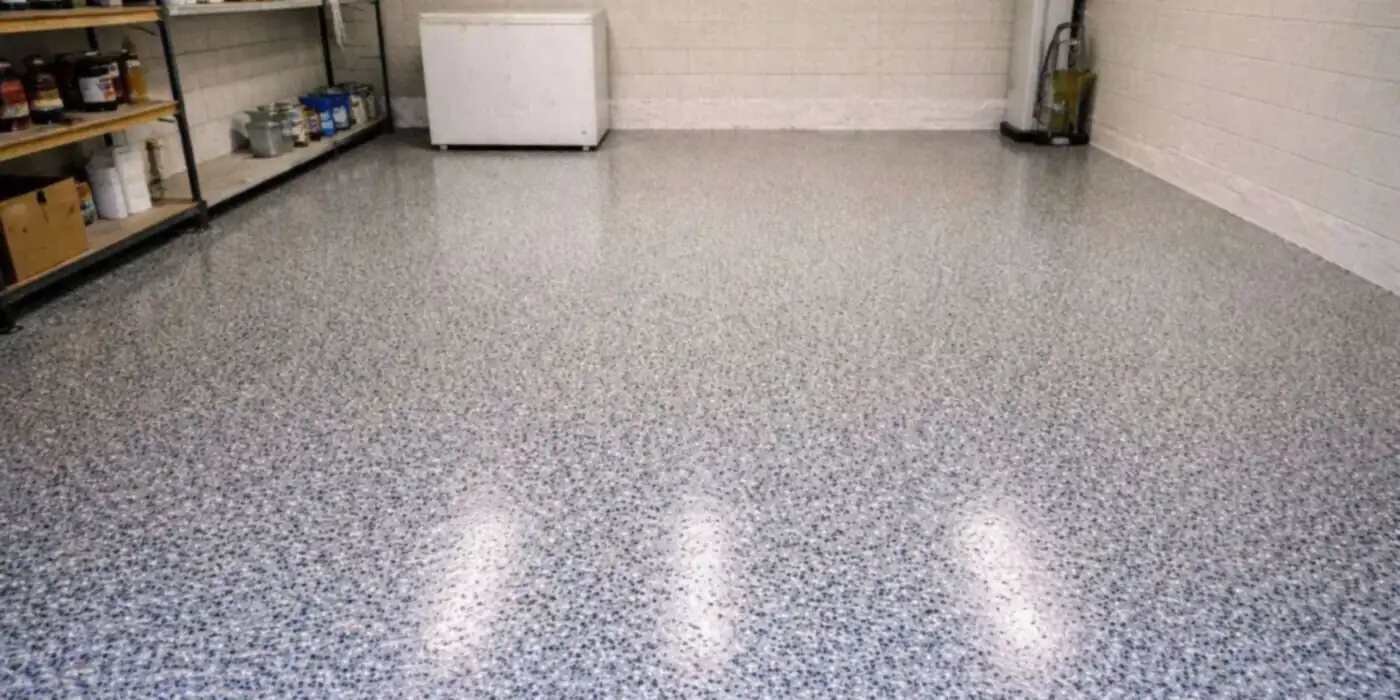
A coated floor is easy to live with: sweep it, mop it now and then, and rinse the salt off in winter. There's no waxing and no yearly resealing. What St. Louis adds is a season of brine and road salt riding in on your tires, plus a stretch of hot, sticky summer weather with its own small quirks. This guide covers both, along with the everyday routine, the stains people ask us about and the signs that a floor needs professional attention.
The Basic Routine
Grit is the real enemy. Fine sand and road grit act like sandpaper under shoes and tires and slowly dull the top coat. Keeping it off the floor does more for the finish than any cleaner you can buy.
About once a week
Run a dust mop or soft push broom over the floor, paying attention to the first few feet inside the garage door and the corners where leaves and grit pile up. Five minutes is plenty.
Every few weeks
- Sweep first, so the mop isn't just pushing grit around.
- Fill a bucket with warm water and a small amount of pH-neutral cleaner — a little mild dish soap works.
- Mop with microfiber. It lifts film without scratching and dries without streaks.
- Work stubborn spots with a soft nylon brush.
- If you used more than a splash of soap, follow with a clean-water pass so no residue is left to attract dirt.
That's the whole routine. The top coat is both the protection and the shine, so there's nothing extra to apply.
Products and Tools to Avoid
- Acidic cleaners. Vinegar, citrus cleaners and many rust removers are acidic and can dull the top coat over time.
- Abrasive pads and wire brushes. Scouring pads and metal scrubbers leave scratches that don't come out. Stick with microfiber and nylon.
- Heavy solvents for everyday cleaning. Save strong degreasers for actual grease spots, and rinse after you use them.
- A pressure-washer tip held close. A garden hose is fine. A narrow high-pressure jet near the surface can chip edges and lift flakes.
- Puddles left for days. Water itself isn't the problem; salty slush left to dry into a crust is.
Brine Season: November to March
Lambert averages about 85 freezing nights a year, most of them between November and March, and most of them thaw by the afternoon. Snowfall is modest — about 16.6 inches in a normal year — but the roads get treated often. MoDOT pre-treats St. Louis-area highways with salt brine mixed with beet juice, and the City of St. Louis spreads salt with a liquid magnesium/calcium chloride added to keep it working in the cold. Your car brings a film of all of it into the garage.
Rinse it off
The concrete industry's own advice for bare slabs is to hose off the salt that cars drop on driveways and garage floors. On a coated floor it's even easier. About once a week during the season, squeegee the meltwater toward the door, rinse the area inside the door with clean water, and finish with a damp microfiber pass. Dried salt leaves a white film that dulls the gloss; rinsing before it dries prevents it.
Keep the slush moving
Hang a floor squeegee by the door. Pushing meltwater out after you park takes a minute and stops salty water from sitting along the walls and in the joints.
Use mats where they help
A walk-off mat at the house door catches salt before it's tracked indoors. Under the car, a parking mat with a raised edge holds meltwater until you can empty it.
Go easy with ice melt outside
If you treat the driveway or apron, keep in mind that some deicers, especially magnesium-based ones, are hard on bare concrete. A coated garage floor keeps the slush on top, where you can squeegee it out, but the uncoated apron outside is still exposed. Use deicer sparingly there and rinse it off when the weather breaks.
Summer: Hot Tires and Muggy Air
Hot-tire marks
St. Louis averages about 47 days a year at 90°F or hotter. After a long drive on I-270 on a day like that, tires come home hot and soft and can leave dark marks. A properly installed top coat is built to resist hot-tire pickup — the coating lifting off under a hot tire — but rubber residue can still show. A pH-neutral cleaner, a few minutes of dwell time and a soft brush take care of most marks.
Condensation on cool floors
July dew points here average in the upper 60s and reach the mid-70s on humid days. When muggy air meets cooler concrete — in a basement, or in a garage after a cool night — moisture can form on the surface. A coated floor shrugs it off, but a damp glossy floor can be slippery. A dehumidifier in the basement and an open garage door to move air both help. If you want more grip, anti-slip additives are available for all of our coatings, and texture can be added when a floor is recoated.
Spills and Stains
A sealed floor doesn't soak up spills the way bare concrete does, so most stains sit on top and lift with a little patience. The sooner you get to them, the easier they are.
Oil and other car fluids
Blot fresh oil with paper towels or a rag, then clean with warm water and a mild degreaser labelled safe for coated floors. Most fluids come up in one or two passes. Antifreeze is toxic to pets, so clean it up right away.
Rust
Move the metal object that caused it, then try warm water and a soft brush. If a mark stays, look for a rust remover labelled safe for coated or sealed floors — many aren't, because they're acidic. Rinse well afterwards.
Paint, glue and caulk
Let drips dry, then lift them with a plastic scraper. Warm, soapy water softens the edges. Skip strong paint strippers and acetone, which can mar the top coat.
Tire marks and scuffs
Warm water, pH-neutral cleaner and a soft brush. Let the cleaner sit for a few minutes on stubborn marks, and don't reach for anything abrasive.
Worn Spot or Peeling Edge?
Call us for a free look at your floor. We'll tell you honestly whether it needs cleaning, a fresh top coat or more.
Basement Floors
Basement floors see less traffic and no road salt, so they mostly need the basic routine. Two things are worth knowing. First, a coated basement floor is easy to clean after water gets in — mop it out, disinfect it and dry it — but the coating doesn't waterproof the basement or stop backups, so keep gutters, grading and the sump pump in good shape. Second, furniture and exercise equipment cause most of the wear: felt pads under chair and table legs and a rubber mat under weights keep the surface looking new.
A Year of Care in St. Louis
| When | What to do |
|---|---|
| Late fall (Oct–Nov) | Sweep out leaves and grit. Put down walk-off and parking mats. Hang a squeegee by the door before the first freezing night. |
| Winter (Dec–Feb) | Squeegee meltwater after you park. Rinse the area inside the door about once a week. Sweep grit often — it's what scratches. |
| Early spring (Mar–Apr) | Give the whole floor a thorough wash to clear salt film. Check the strip inside the garage door for dull or worn spots. |
| Summer (May–Sep) | Weekly sweep, mop every few weeks. Clean hot-tire marks as they appear. Run a dehumidifier in the basement on muggy days. |
When to Call Us
Cleaning is a homeowner job. A few things, though, mean the coating itself needs attention, and catching them early keeps a small fix small:
- Peeling or flaking. Coating that lifts at the edges or comes up in sheets points to a bond or moisture problem underneath. Cleaning won't fix it.
- Bubbles or blisters. These usually mean moisture is pushing up through the slab.
- Chips down to bare concrete. Small chips can be patched; left open, they let salty water reach the concrete.
- A dull, worn strip at the door. The top coat is the wear layer. Once the traffic lane is worn through, a properly prepped fresh top coat brings it back.
- New or growing cracks. We'll take a look and tell you honestly whether it's cosmetic or something for a structural engineer.
Call (314) 334-1902 or request a visit online. Our repair and maintenance page explains what a recoat involves.
Frequently Asked Questions
How do I get road salt off my epoxy garage floor?
Rinse it before it dries. During the salt season, squeegee meltwater toward the door after you park, rinse the area inside the door with clean water about once a week, and finish with a damp microfiber mop and a pH-neutral cleaner. Dried salt leaves a white film; rinsing prevents it.
Can I clean an epoxy floor with vinegar?
We don't recommend it. Vinegar and other acidic cleaners can dull the top coat over time. Warm water with a small amount of pH-neutral cleaner or mild dish soap does the job.
Why does my garage floor get black tire marks in summer?
Tires get hot on summer highways, and St. Louis averages about 47 days a year at 90°F or more. Hot rubber can leave residue on the surface. A pH-neutral cleaner, a few minutes of dwell time and a soft brush remove most marks.
Why is my basement floor damp on humid days?
When humid summer air meets a cooler floor, moisture can condense on the surface. A dehumidifier and moving air help. If the dampness seems to come from below, call us; we check slabs for moisture and can tell you what's going on.
How often should I clean an epoxy floor?
Sweep or dust-mop about once a week and damp-mop every few weeks. In winter, add a weekly rinse of the area inside the garage door to clear brine and salt.
When does an epoxy floor need a new top coat?
When the traffic lane, usually the strip inside the garage door, looks dull or worn through the clear layer. A properly prepped fresh top coat renews it without replacing the whole floor. We're happy to take a look and tell you whether it's needed yet.
Related Articles
Why St. Louis Epoxy Floors Peel at the Garage Door
Why the strip by the overhead door is the first place a coating fails, and how good prep prevents it.
How St. Louis's Climate Affects Epoxy Floor Durability
Freezing nights, beet-juice brine and 90-degree summers: how St. Louis weather tests a coated floor.
How Much Does Epoxy Flooring Cost in St. Louis?
Typical St. Louis prices for garage and basement floors, labelled for what they are: typical, not a quote.